
Last updated November 14, 2026
 Wrought iron
 Wood & steel frame
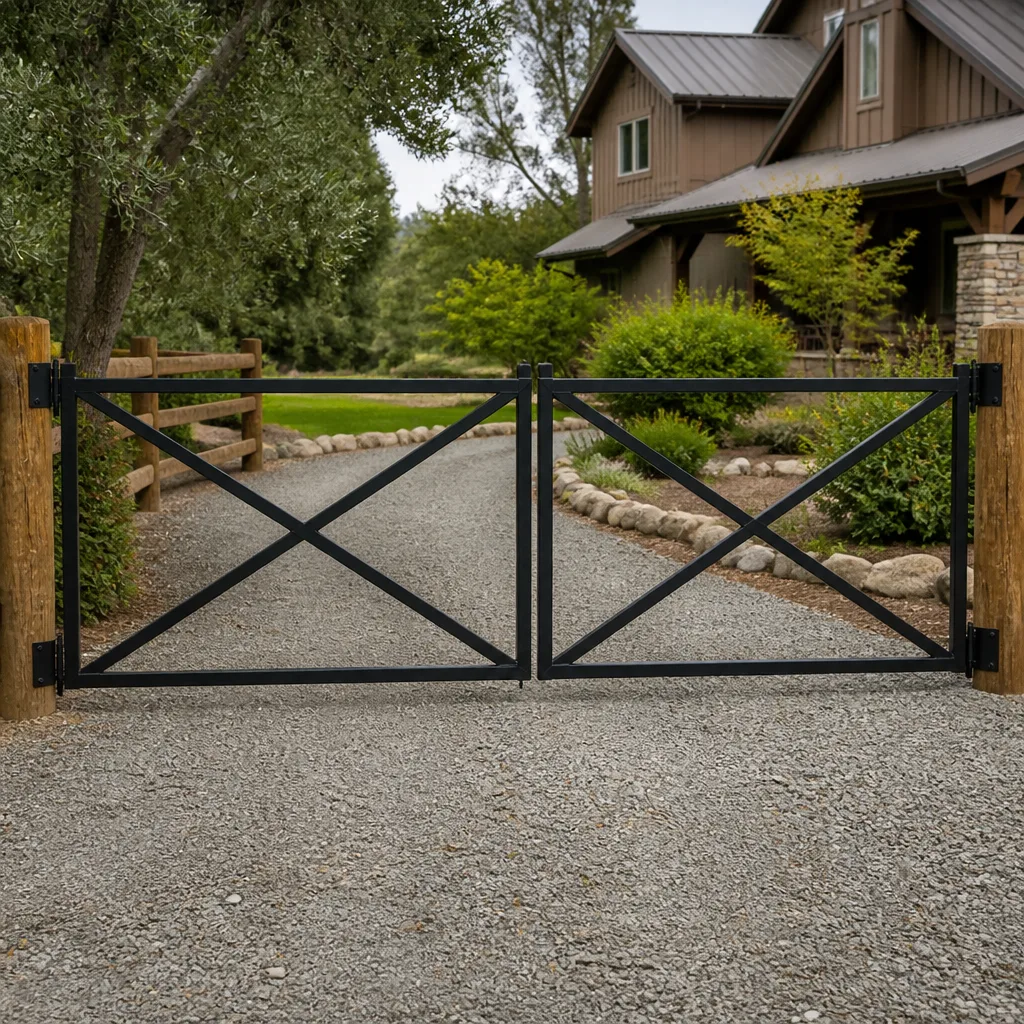 Farm & ranch
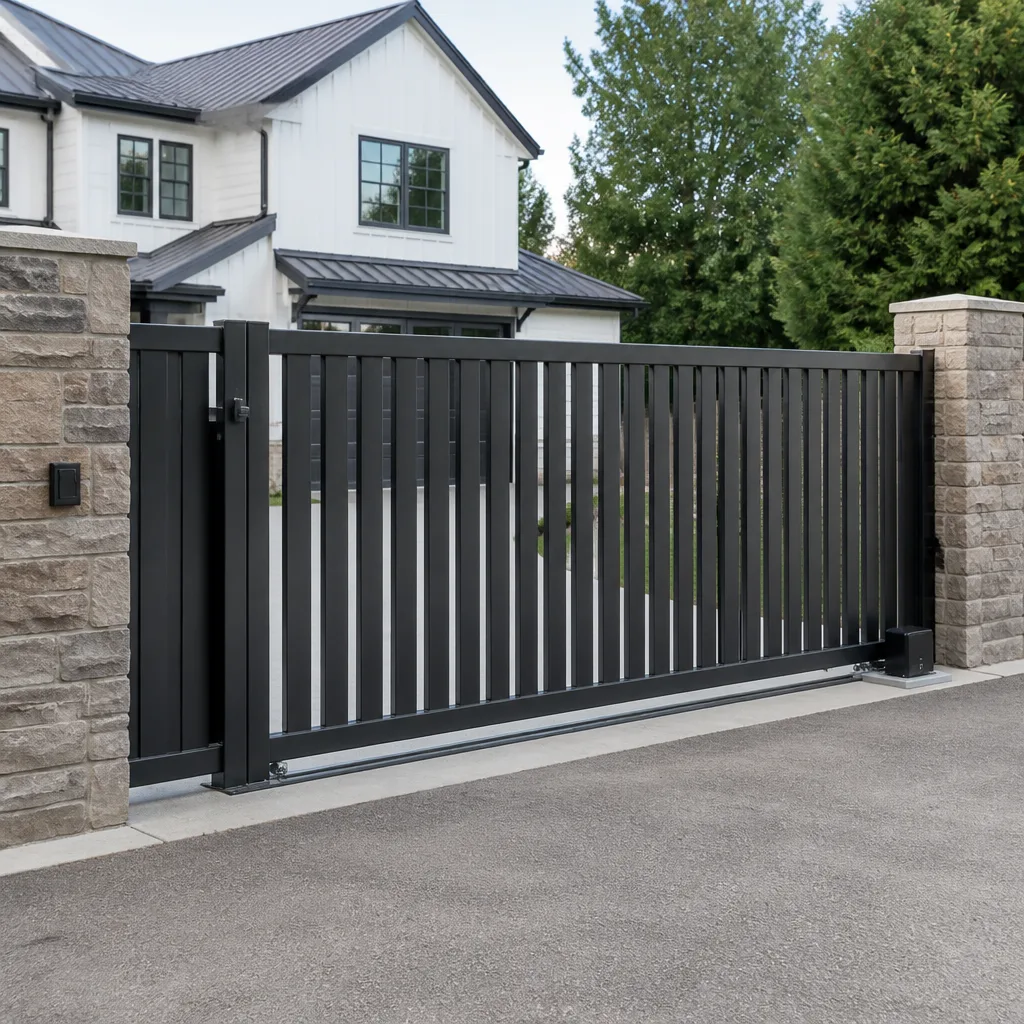 Sliding driveway gates
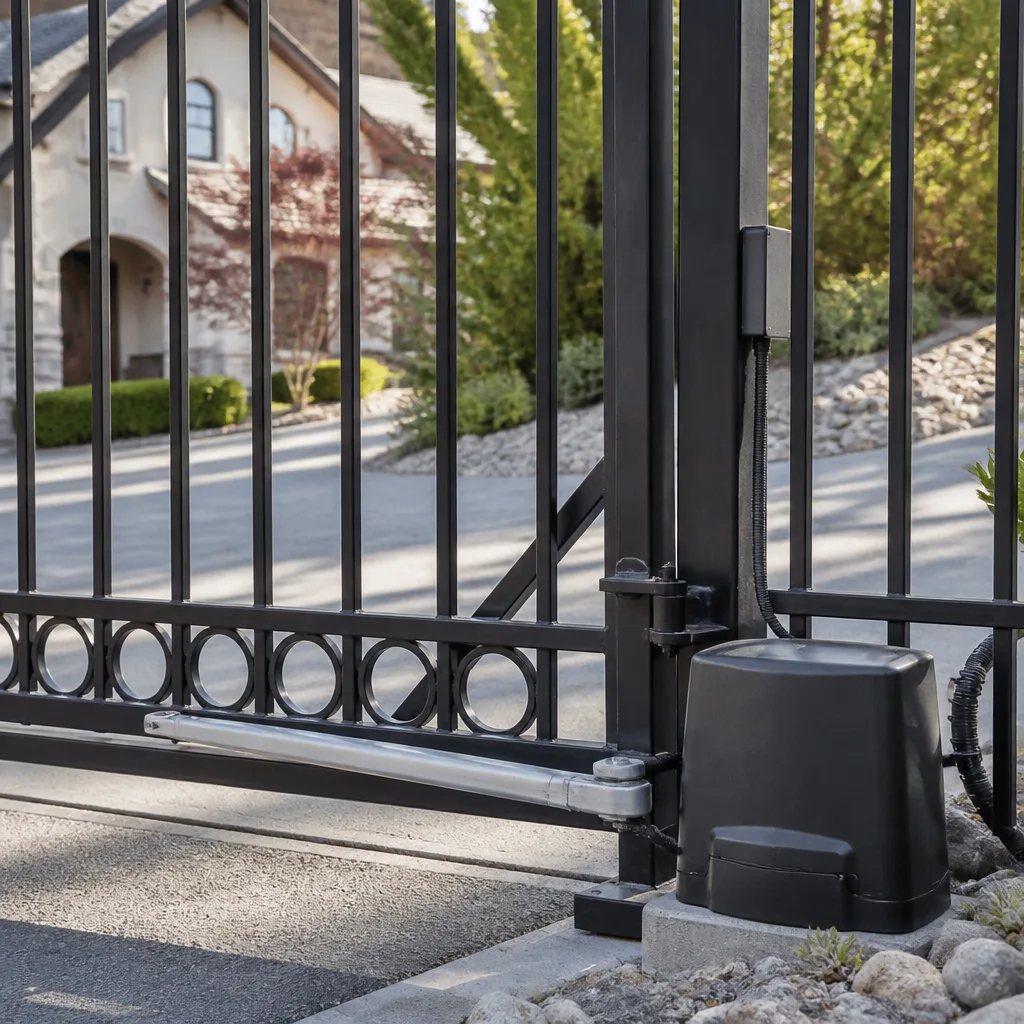 LiftMaster operators
Free on-site gate assessment - hinges, posts, and your LiftMaster or Nice gate operator checked before anything is quoted
The assessment is free and the quote is the invoice.
Get your free estimateSeasonal Gate Repair Care for Stockton: Year-Round Homeowner’s Guide
Most gate care advice you’ll find online was written for a climate that Stockton doesn’t have. It assumes four wet, cold months and a long freeze, and it treats humidity as a single problem. San Joaquin Valley weather runs on a different cycle. Our summers push aluminum and steel past the point where tolerance gaps close up. Tule fog settles into the low ground along the Calaveras and San Joaquin rivers and leaves a film on every exposed contact. The Delta wind moves through here with enough consistency that hinge wear shows up sooner than it does inland. Each of those conditions stresses a different part of your gate, and each one has a maintenance window that actually matters. This guide maps the real calendar for gate repair in Stockton, season by season, with the checks worth doing yourself and the ones to leave to a technician.
Quick Answer
Seasonal gate care in Stockton follows four distinct phases: summer heat management for track and roller binding, fall debris clearing around underground loop detectors before the rains, winter tule fog protection for keypad and control contacts, and a spring recalibration of motor force settings. Delta wind stress on swing gate hinges is a year-round concern that warrants inspection at least twice annually. When something already isn’t working, that’s a repair call, not a maintenance task.
Styles & brands we work with
- Wrought iron
- Wood & steel frame
- Farm & ranch
- Sliding driveway gates
- LiftMaster operators
Table of Contents
- Why the Standard Seasonal Advice Doesn’t Fit Stockton
- Summer: When Thermal Expansion Looks Like a Dead Motor
- Fall: Loop Detectors, Conduit, and the Rainy Season
- Winter: What Tule Fog Actually Does to Your Controls
- Spring: Recalibrating Force Settings Before the Heat Arrives
- The Delta Wind Variable and Hinge Stress
- Your Twelve-Month Gate Maintenance Calendar
- Common Mistakes to Avoid
- When to Call a Professional
- Frequently Asked Questions
Why the Standard Seasonal Advice Doesn’t Fit Stockton
Gate manufacturers build operating tolerances around a temperate assumption. Their manuals assume mild humidity, a real winter, and a moderate summer. None of those describe Stockton. Our summer highs run into triple digits, which is a different category of heat than anything the manuals account for. Winter here is wet rather than freezing, so the failure mode isn’t ice in a track – it’s moisture that lingers for days and finds its way into every sealed connection. And the wind off the Delta doesn’t stop for the season the way coastal breezes do elsewhere. It’s a steady year-round load on every hinge and post.
That combination produces a specific pattern we see in our work across Stockton neighborhoods. Gate problems cluster by season. In July and August, we get calls about gates that have gone stiff or stopped reversing, and roughly nine times out of ten the motor is fine and the track is the problem. In December and January, the calls shift to keypads that won’t read a code and control boards that behave erratically. Both are weather signatures, and both are largely preventable if the maintenance happens ahead of the season rather than after it.
There’s a second reason the standard advice falls short. Much of it is written for manual gates. Stockton has a large installed base of automated residential gates, and the automation adds a whole layer of seasonal issues – force settings, limit positions, sensor alignment, and electronics that respond to conditions a manual gate never sees. The systems we work on most, including FAAC and BFT operators and Linear and Viking slide and swing units, are reliable equipment. They still need the seasonal attention their conditions demand.
What follows is the maintenance calendar we’d give a homeowner in Lincoln Village or a property manager with a gate off March Lane. It’s ordered by season, and each section explains what to check, what to skip, and when the job has crossed from maintenance into repair.
Summer: When Thermal Expansion Looks Like a Dead Motor
This is the single most misdiagnosed problem we encounter in San Joaquin Valley gate service. A slide gate that ran smoothly in April starts moving sluggishly in July. It may stop partway, reverse on its own, or trip the operator’s overload protection and refuse to move at all. The owner assumes the motor has failed. What’s actually happening is thermal expansion in the aluminum track.
Aluminum expands with heat, and it expands unevenly along a track that’s exposed to direct sun on one side and shade on the other. A track that was correctly aligned and gapped in spring closes those gaps by midsummer. The rollers bind, the operator works harder than it should, and the extra load trips a safety cutoff that exists to protect the motor. If your gate is stiff and the track is hot to the touch, you’re looking at expansion, not an electrical failure.
Here’s the summer inspection sequence:
- Run the gate on a cool morning and time the full travel, so you have a baseline to compare against.
- Feel the track by hand at the midpoint and near the ends, checking for tight spots where the rollers catch.
- Look for shiny wear marks on the inside of the track; these show where binding actually occurs.
- Check that the track’s expansion gaps at the mounting points are still open – if they’ve closed completely, the track needs adjustment.
- Clear any debris or grit from the track bed before the heat sets in, since grit under a roller multiplies the binding.
- If the gate still stalls after the track is clean and the gaps are open, that’s a control or motor issue and needs a technician.
The fix for expansion binding is usually mechanical: track adjustment, roller replacement, or a re-gap of the mounting brackets. It’s not a motor replacement, and any diagnosis that jumps straight to a new operator without checking the track under summer conditions deserves a second opinion. We diagnose first and fix the actual problem, which sometimes means telling an owner their motor is perfectly good.
Fall: Loop Detectors, Conduit, and the Rainy Season
Fall in Stockton is the window that matters most for anything buried in the ground. Underground loop detectors, the wire coils that tell an automatic gate a vehicle is present, sit inside conduit runs that are exposed to whatever comes down. When those conduit runs fill with debris, leaf matter, and grit, the rainy season turns them into a slow drain that soaks the loop and throws the gate into permanent “vehicle present” mode. The gate stays open, or it refuses to close, and the owner has a security problem they can’t see the cause of.
Loops are the part of an automated system most people forget about, because nothing about them is visible. That invisibility is exactly why they fail. Here’s what the fall inspection covers:
- Walk the driveway line where the loop is buried and look for settled soil, depressions, or cracked pavement above it.
- Clear leaves and debris from the curb line, drainage swales, and any low spots near the conduit entry points.
- Check that the conduit ends are open and draining, not blocked or full of leaf litter.
- Test the loop with a vehicle: the gate should detect a car and hold, then open or close correctly when it clears.
- Watch for erratic behavior like a gate that closes on a car or holds open with nothing there – both point to loop trouble.
- Inspect the control cabinet for signs of moisture or insect intrusion before the wet months.
Cabinets are the other fall priority. Control boards in FAAC and Viking systems are well sealed, but seals age. A cabinet that’s been dry all summer can be a surprise in November. Opening it once, checking the gasket, and clearing any debris that’s collected inside is a cheap habit that prevents a control board replacement. If you find corrosion or a board that’s already acting up, get it looked at before the rainy season rather than after.
Fall is also the right time to test the whole system under load. Run the gate fully open and fully closed a few times, test the safety edges, and confirm the keypad and any access controls still work. Better to find a problem in October than to discover it in a December downpour. If you’d rather not do that once-over yourself, gate repair visits are a good fit for a pre-winter check.
Winter: What Tule Fog Actually Does to Your Controls
Tule fog is not just a visibility problem. The fog that forms in the low ground around Stockton deposits moisture in a way rain doesn’t – it lingers, it settles into every seam and opening, and it does it slowly enough that water has time to work into connections that a quick rain would shed. For gate electronics, this is the most demanding season of the year, and it’s the reason keypad failures and erratic control-board behavior cluster in the winter months.
The mechanism is straightforward. Fog moisture carries dissolved material from the air and from the surfaces it settles on. When it deposits on keypad contacts and connector pins, it leaves mineral residue behind as it evaporates. That residue is mildly corrosive, and repeated cycles build it up. Over a season, a keypad that was reliable in October starts ignoring presses or reading the wrong code. A control board that’s been fine for a year starts misbehaving for no apparent reason.
What actually helps:
- Keep keypad and control cabinet housings sealed. A cracked gasket or a missing cover screw is the entry point for fog moisture.
- Use dielectric grease on exposed connector pins – this is the protective treatment that works, and it’s what a technician should apply during a winter check.
- Confirm that control cabinets sit above grade and drain properly, so fog condensation doesn’t pool inside.
- Check any exposed wiring for cuts or worn insulation; a damaged jacket lets moisture reach the conductor.
What doesn’t help, and this is where a lot of winter maintenance goes wrong, is spraying contacts and connections with a general-purpose lubricant or cleaner that turns gummy and traps dust. It looks like maintenance and it makes the problem worse. Dielectric grease is the right product; most spray lubricants are the wrong one. If you’re not sure which is which, leave the treatment to a technician rather than guessing. The cost of a winter check is small next to replacing a control board.
Winter is also when limit positions and safety sensors drift enough to matter. A gate that reverses mid-travel on a foggy morning is often a sensor that’s been obscured by condensation or shifted slightly out of alignment. Test the safety edges and the photo-eye alignment once the fog season is underway.
Spring: Recalibrating Force Settings Before the Heat Arrives
Here’s a subtlety most gate owners never hear about. An operator’s force setting controls how much resistance the motor pushes through before it stops or reverses. Those settings get tuned for the conditions the gate ran in. A system that was tuned in winter was tuned against cold-weather resistance – slightly stiffer hinges, slightly tighter clearances, cold-thickened lubricant. Then spring heat arrives, resistance drops, and a motor that was correctly set for January now over-torques in April and May.
Over-torque is hard on the motor and hard on the gate. It accelerates wear on the operator and puts more load on every mechanical part between the motor and the gate panel. The gate moves, so nothing looks wrong, but the system is being pushed past its design intention every single cycle.
Spring recalibration sequence:
- Run the gate through several full cycles and watch for any hesitation, stutter, or change in speed across the travel.
- Check the force and sensitivity settings against the manufacturer’s specification for the current gate weight and track condition.
- Rebalance the gate panel if it’s a swing gate – a gate that no longer sits level will fight the operator all season.
- Lubricate the hinges and moving parts with the product the manufacturer specifies, not a general spray.
- Verify the safety reverse works correctly after any setting change, since force adjustments affect how the system responds to an obstruction.
- Re-torque mounting hardware and check post stability, particularly after a windy spring.
The last step matters more in Stockton than the checklist suggests. A spring wind event can shift a post just enough to change how a swing gate hangs. Catching that in April and adjusting it is a small job. Leaving it until July means the operator has been fighting a misaligned gate for three months. Force settings are a technician’s task, not a homeowner’s – they affect how your gate responds to a person or vehicle in its path, and getting them wrong is a safety issue, not just a performance one.
The Delta Wind Variable and Hinge Stress
Wind is the seasonal factor most Stockton gate owners underestimate, because it doesn’t announce itself the way heat or fog does. The Delta breeze runs through here consistently, and a swing gate is essentially a sail on a pivot. Every gust that catches an open gate panel loads the hinge. A gate left in the open position during a windy stretch sees thousands of small load cycles, and those cycles do real work on hinges, posts, and the operator’s mechanical linkage.
The practical consequence is an inspection interval shorter than what you’d use in a calmer climate. Twice a year is a reasonable baseline, timed to spring and fall so you catch hinge wear before it becomes a sagging gate. On a large gate or a property that sees constant wind, more frequent checks make sense.
What to watch for on a swing gate:
- Hinge play – lift the gate slightly and feel for movement at the hinge; any loose motion means the hinge is wearing.
- Sag – a gate that no longer clears its latch or closes on its own is telling you the hinges or posts have shifted.
- Post movement – check for cracks or looseness at the base, especially after a strong spring wind.
- Operator strain – a gate that used to swing freely but now hesitates is likely fighting a hinge problem.
Slide gates see wind load differently. A rolling gate catches less sail area than a swinging one, but wind-driven debris collects in the track, and the track itself can take a beating. On BFT and Linear slide systems, keeping the track clear is the main defensive move. The hinge inspection interval is where the wind load shows up most, and it’s the check most people skip.
For a broader view of what gate repair involves across systems, our main page on Gate Repair Stockton covers the range of manual and automated work. And if you’re also curious about what the city itself factors into the picture, the guide to Stockton is worth a read.
Your Twelve-Month Gate Maintenance Calendar
Here’s the calendar condensed into one view. This is the schedule that fits San Joaquin Valley conditions, and it’s different from a national maintenance guide in two places: the summer focus on thermal binding and the winter emphasis on fog and contacts. Both reflect what the local climate does, not what a temperate-climate manual assumes.
- March-April (Spring reset): Recalibrate force settings, rebalance swing gates, lubricate hinges, re-torque hardware, confirm safety reverse.
- May-June (Pre-summer): Clean and gap the track, check roller condition, clear grit from the track bed, test the operator under load.
- July-August (Summer heat): Watch for binding and stalling, time the travel on a cool morning, avoid diagnosing expansion as motor failure.
- September-October (Fall prep): Clear debris from loop lines and conduit runs, check cabinet seals, test loops and access controls, run a full system test.
- November-December (Pre-fog): Confirm keypad and cabinet seals, apply dielectric grease to exposed pins, check wiring for damage, test safety sensors.
- January-February (Winter): Monitor keypad and control-board behavior, check for moisture intrusion, confirm limit positions and sensor alignment.
- Year-round: Inspect swing gate hinges and posts twice a year for wind load stress, and keep the track clear of wind-blown debris.
Two things are worth noting about this calendar. First, it front-loads the work. Most of the effort happens before the season that stresses the system, which is cheaper than repairing damage after the fact. Second, it’s a maintenance schedule, not a repair schedule. If a check turns up a real problem, it moves into repair territory, and that’s a different conversation.
Which tasks belong on the homeowner’s list
Some of this you can and should do yourself. Clearing debris from a track, clearing leaves from a conduit line, checking a cabinet for obvious moisture, and running a system test are all appropriate homeowner tasks. Photograph anything you find and keep a simple log so you can see whether a problem is recurring.
Other tasks belong to a technician. Force settings, limit positions, control-board diagnosis, safety-edge testing and adjustment, and anything involving the electrical supply or wiring are not DIY territory. The gate operator’s wiring carries mains power, and a gate panel is heavy enough to cause serious injury if it moves when it shouldn’t. Force settings in particular should never be adjusted by anyone who isn’t equipped to verify the safety reverse afterward. If you’re unsure whether a task is yours or a technician’s, treat it as a technician’s.
Common Mistakes to Avoid
- Diagnosing summer binding as a dead motor. When a slide gate stalls in July, the track and rollers are the first suspects, not the operator. Replacing a good motor because the track expanded is an expensive way to solve the wrong problem.
- Skipping the fall loop and conduit check. Buried loop detectors don’t announce themselves until they fail, and by then the rainy season is already soaking the conduit. Clear the lines in October, not in December.
- Spraying contacts with a general-purpose lubricant. It looks like winter maintenance and it traps dust and turns gummy. Dielectric grease on exposed pins is the treatment that helps; a spray can usually makes things worse.
- Leaving winter force settings in place through spring. A motor tuned for cold-weather resistance will over-torque in spring heat. Recalibrate once the cold months end, before the triple digits arrive.
- Ignoring wind load on swing gate hinges. A gate that sits open in the Delta breeze is working its hinges every time it moves. Inspect twice a year, especially after a windy spring.
- Treating a safety sensor as an annoyance. A gate that won’t close because the loop or sensor reads “vehicle present” is doing its job. Bypassing the sensor creates a real hazard; fix the sensor instead.
- Running the gate on a track full of grit through the dry months. Grit under a roller accelerates wear quickly in the heat. A clean track is the cheapest thing you can do for your operator.
When to Call a Professional
Call a technician when the problem is beyond a maintenance check. That includes any gate that’s stopped moving entirely, any operator that trips its overload or refuses to reverse, keypads or control boards that behave erratically despite clean and sealed connections, and any system where the safety reverse doesn’t work. It also includes anything involving wiring, the electrical supply, or a control cabinet you’re not comfortable opening. Heavy gate panels and live wiring both warrant a trained professional, and force settings should always be verified by someone who can test the safety reverse afterward.
Some of these are urgent. If a gate won’t close or a safety sensor has failed, that’s a security and safety issue, and it’s worth calling rather than waiting. Electric gate repair calls are one of the areas where seeing the problem in person beats any amount of phone diagnosis, because the fault is often in a connection or a setting that needs to be tested at the gate.
Gate Repair Stockton offers free estimates in Stockton – call (833) 946-1127. We answer 24/7. Fast dispatch from 7am to 7pm, Sunday through Friday. If a call comes in outside dispatch hours, we’ll book it into the next opening.
Frequently Asked Questions
Twice a year is a reasonable baseline, timed to spring and fall. Stockton’s climate adds stress that a temperate-climate schedule doesn’t account for: summer heat that closes up track tolerances, tule fog that works into contacts, and year-round Delta wind that loads swing gate hinges. A spring reset and a fall pre-winter check cover the two most important windows. If your gate sees constant wind or heavy daily use, more frequent checks make sense.
Thermal expansion in the aluminum track is almost always the cause. Aluminum expands with heat and does it unevenly along a track that’s partly in sun and partly in shade, which closes the gaps the gate needs. The rollers bind, the operator works harder, and the overload protection may trip. Check the track by hand on a cool morning for tight spots and shiny wear marks. If the track is clean, gapped, and the gate still stalls, that’s a control or motor issue worth a technician’s look. Call (833) 946-1127 for a free estimate.
Yes, and it does it differently than rain does. Fog moisture lingers and settles into seams and openings slowly enough to work into connections, and it leaves mineral residue behind as it evaporates. Repeated cycles build up on keypad contacts and connector pins, which is why keypad and control-board failures cluster in winter. Keeping housings sealed and applying dielectric grease to exposed pins is the treatment that helps. A general-purpose spray lubricant usually makes it worse.
Clear leaves and debris from the conduit lines and the low spots near them, confirm the conduit ends are open and draining, and test the loop with a vehicle. A loop that holds the gate open with nothing there, or closes on a car, is already showing trouble. Debris and grit in the conduit runs turn into a slow drain once the rains arrive, and a soaked loop throws the gate into permanent “vehicle present” mode. Get the lines clear in fall, not after the rain starts.
We’d advise against it. Force settings control how much resistance the motor pushes through before it stops or reverses, and they directly affect how the gate responds to a person or vehicle in its path. They also need to be verified against the safety reverse after any change, which requires the right equipment and knowledge to confirm. This is a technician’s task and a safety issue, not a performance tweak.
It does, especially for swing gates. A gate panel is essentially a sail on a pivot, and every gust that catches it loads the hinge. A gate left open during a windy stretch sees thousands of small load cycles. Inspect hinges and posts twice a year, feel for hinge play, and watch for a gate that no longer clears its latch or swings freely. On slide gates, wind-driven debris collects in the track, so keeping it clear is the main defensive move. For electrical and automation work specifically, see our electric gate repair page.
The Bottom Line
Seasonal gate care in Stockton isn’t the national checklist with different months filled in. The local climate runs on four stresses: summer thermal expansion in the track, fall debris in the conduit and loop lines, winter fog moisture on the contacts, and year-round Delta wind on the hinges. Maintaining ahead of each one is cheaper and simpler than repairing after. Do the checks you can do safely – clearing tracks, clearing lines, testing the system – and leave force settings, wiring, and safety sensors to a technician. The rest is timing. Call (833) 946-1127 for a free estimate. We answer 24/7. Fast dispatch from 7am to 7pm, Sunday through Friday.
Written by the team at Gate Repair Stockton, serving Stockton since 2017.
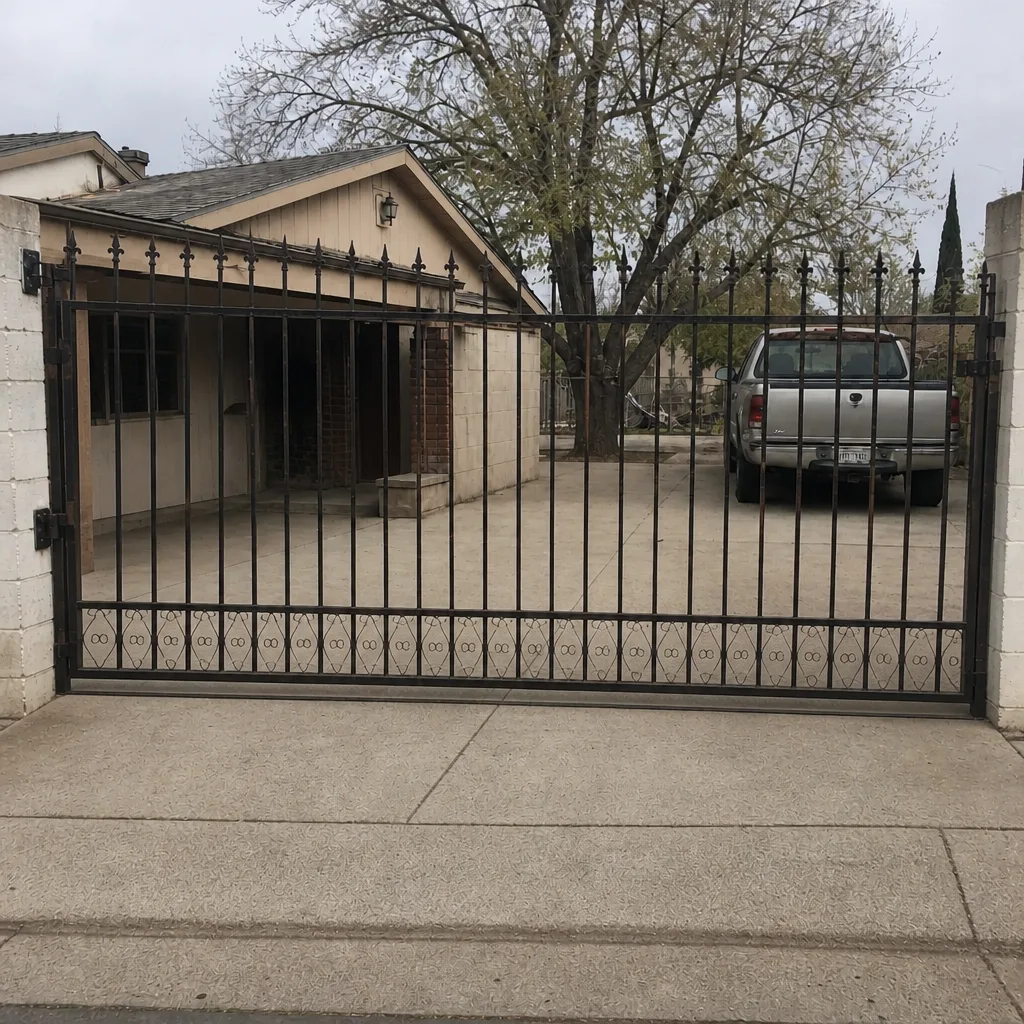
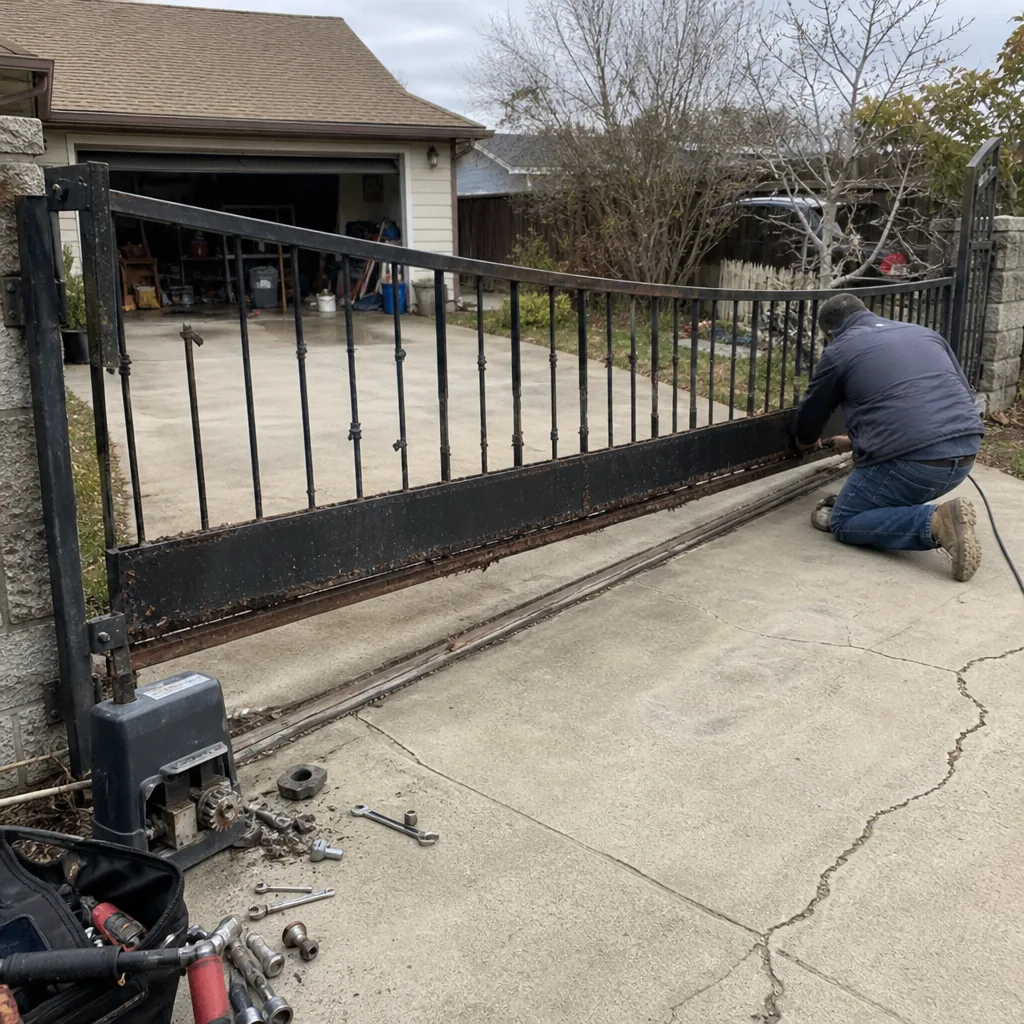
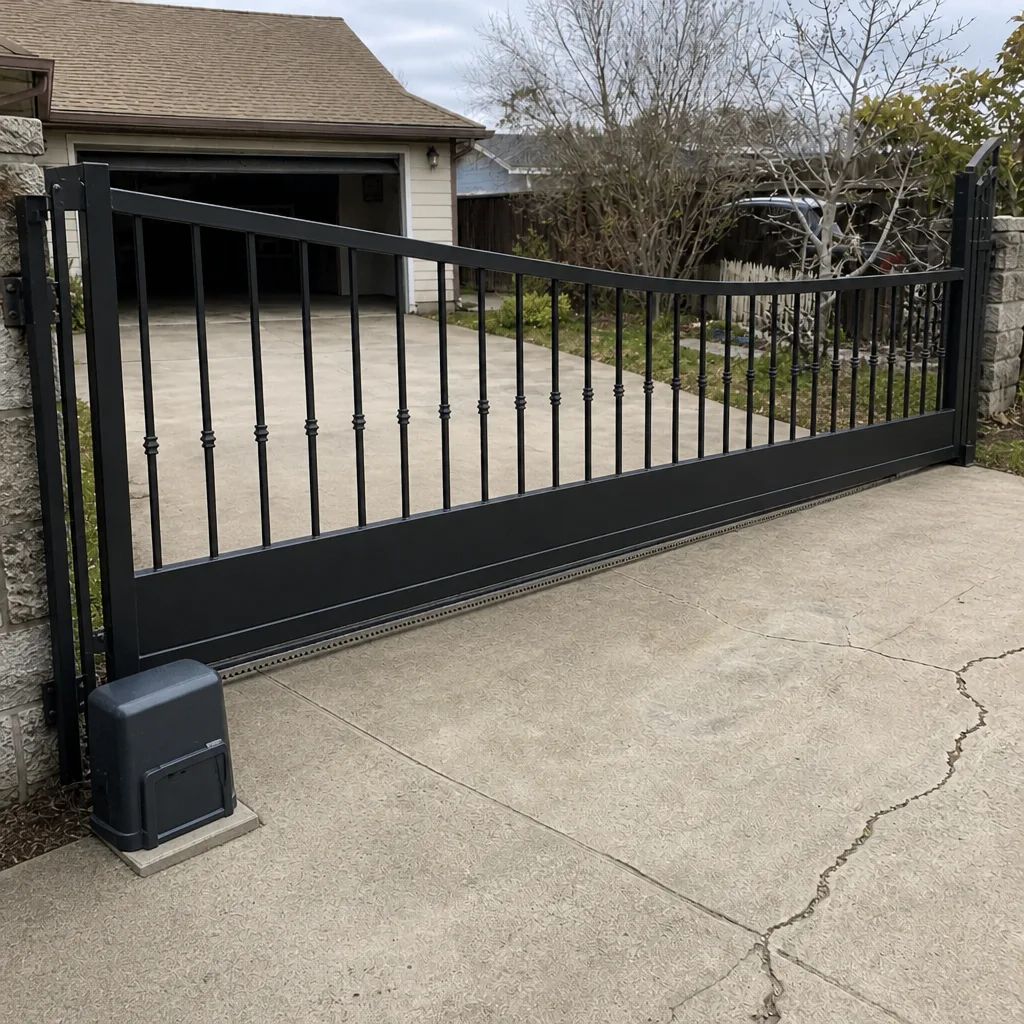
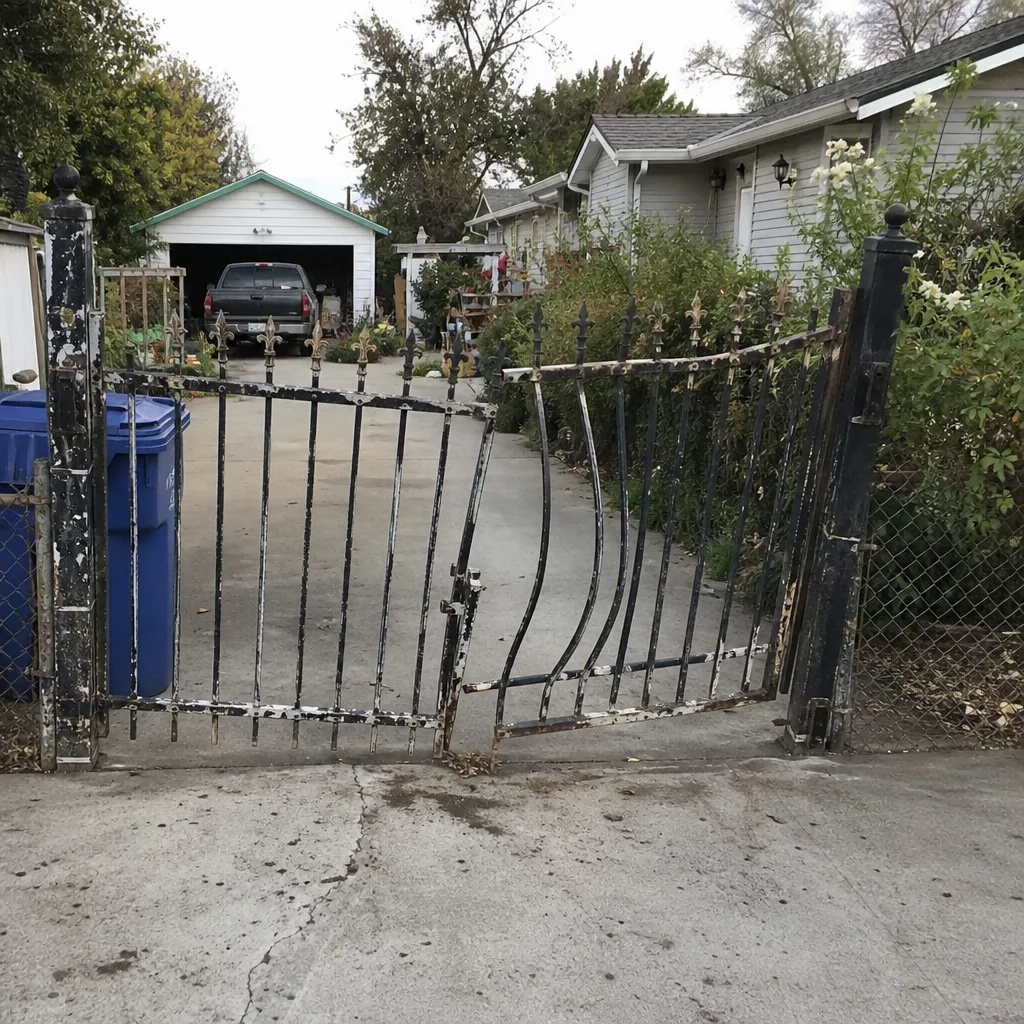
See the difference
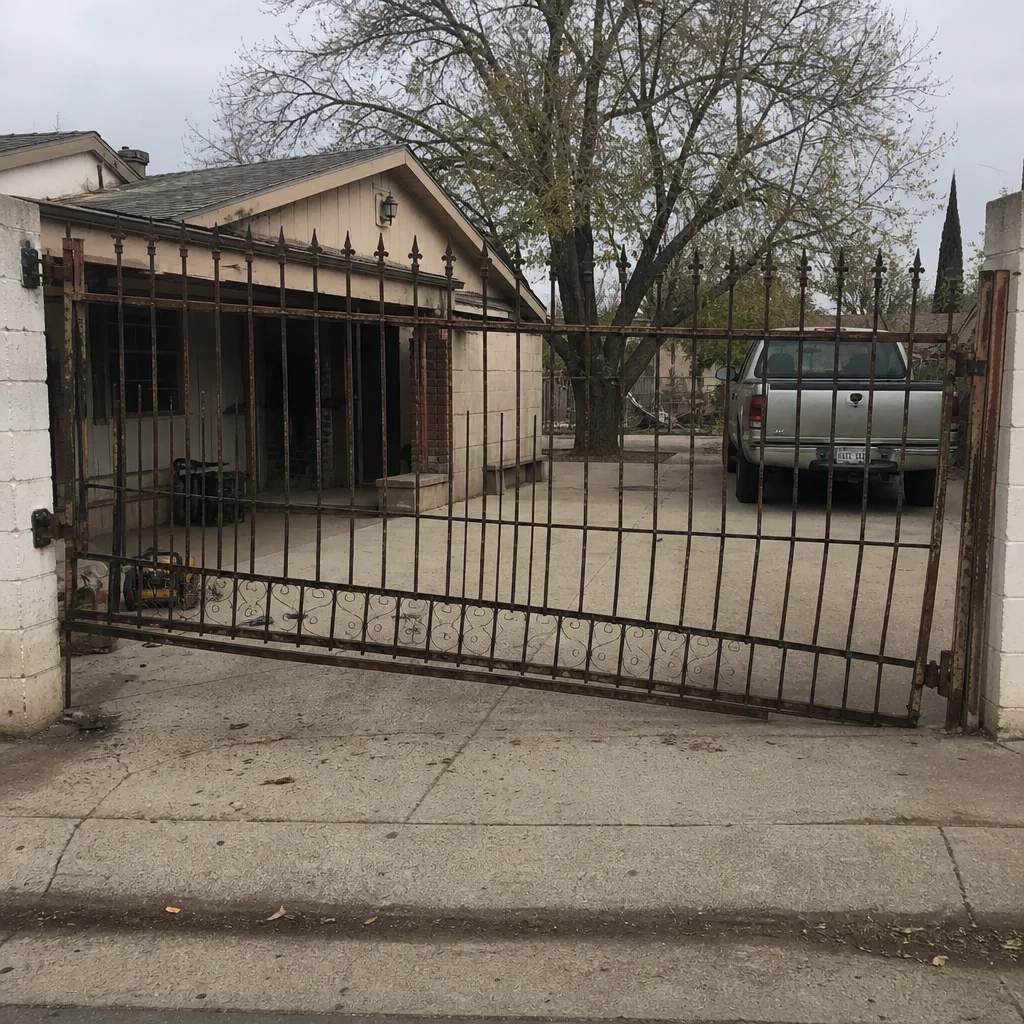 Before
 After
 Before
 After
 Before
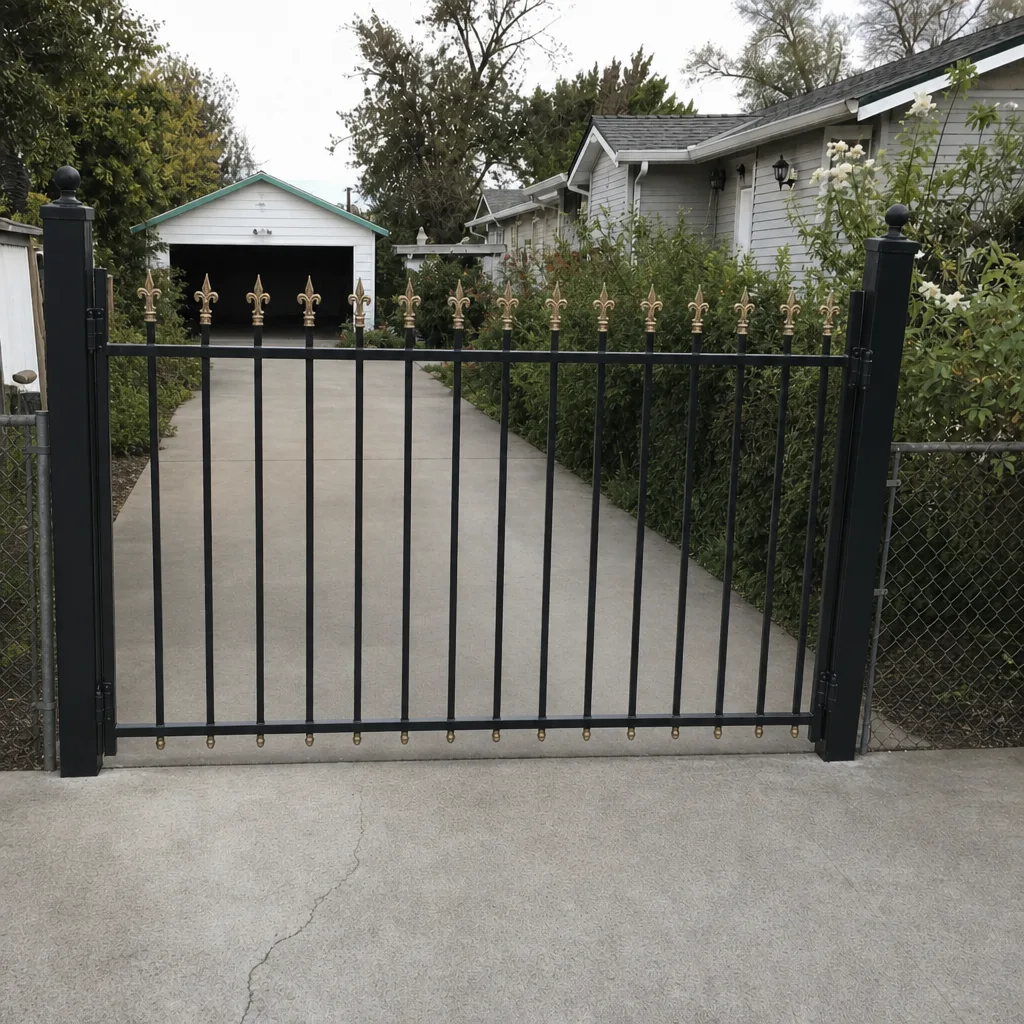 After