
Last updated November 14, 2026
 Wrought iron
 Wood & steel frame
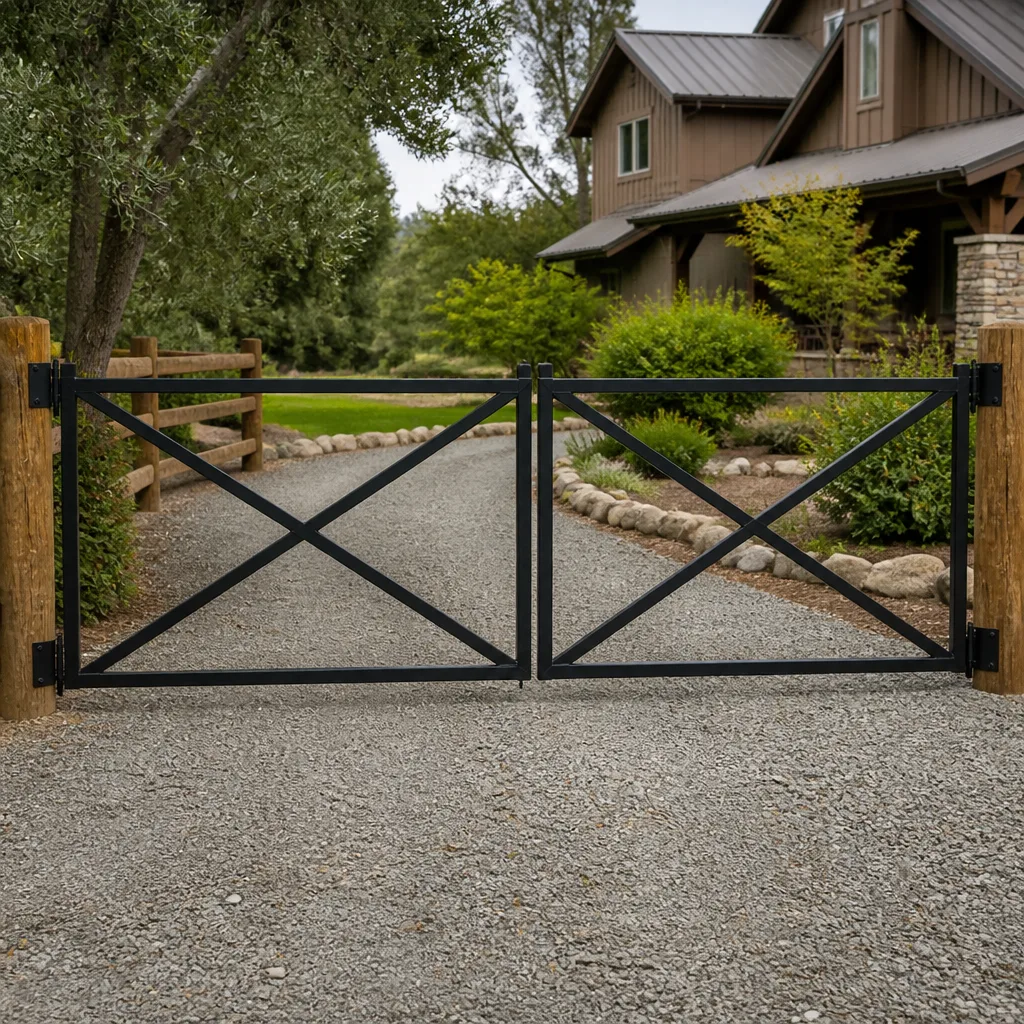 Farm & ranch
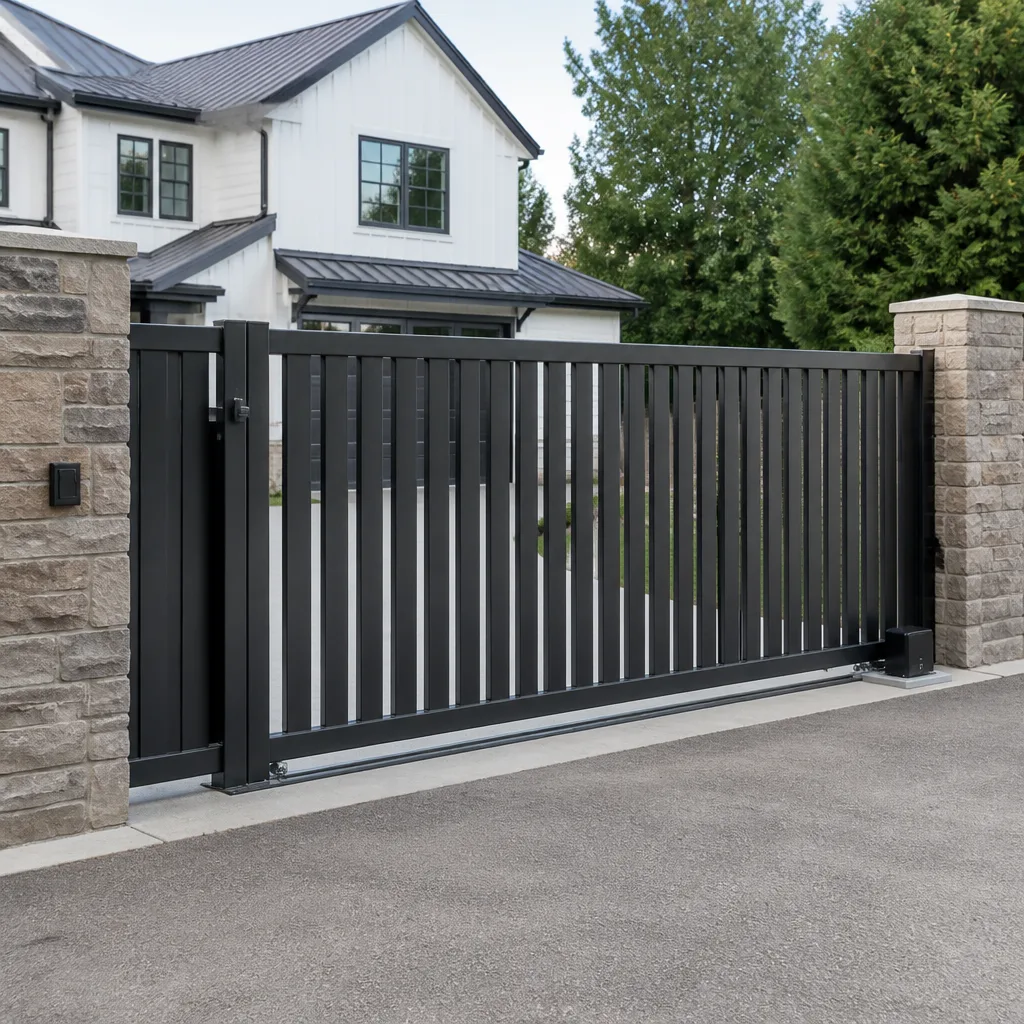 Sliding driveway gates
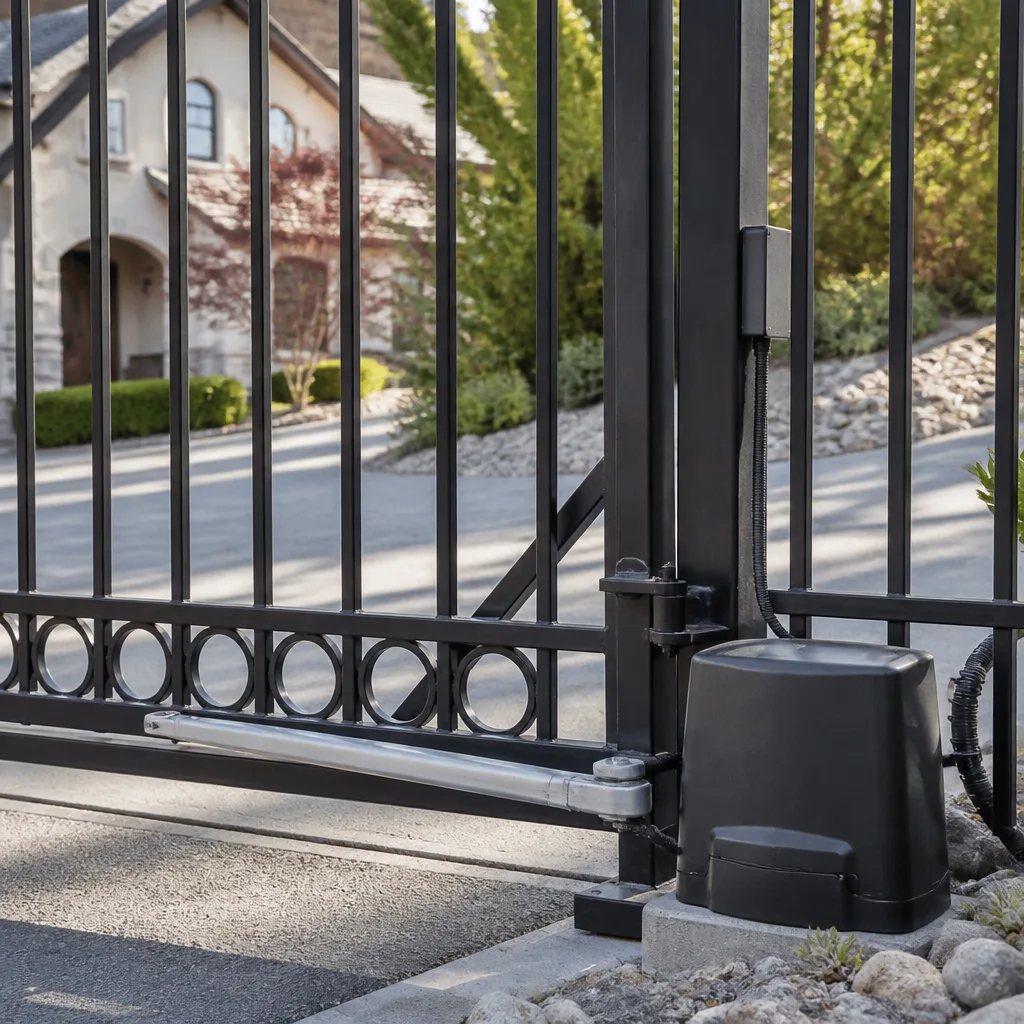 LiftMaster operators
Free on-site gate assessment - hinges, posts, and your LiftMaster or Nice gate operator checked before anything is quoted
The assessment is free and the quote is the invoice.
Get your free estimateGate Repair Warning Signs: A Stockton Homeowner’s Reference Guide
A gate that hesitates for a second or two before it moves isn’t sluggish. That pause is the operator telling you the motor is pulling excess current, and in our experience you have a window of roughly 30 to 60 days before it gives out entirely. Most gate failures we see in Stockton don’t begin with a bang. They begin with a behavior the owner talked themselves out of. Nobody ignores a gate that stops dead in its tracks. Plenty of people ignore a gate that “still works” when it makes a grinding sound once a week. This guide translates those behaviors into diagnoses so you can act on what the gate is actually telling you, not on a hunch.
Quick Answer: The warning signs that matter most on a gate in Stockton are a gate that reverses on close, fails to open fully, responds only intermittently, makes a grinding or scraping noise, or hesitates before moving. Each points to a specific system fault, from a motor drawing excess current to a misaligned track, and each gets worse with time, so the diagnosis should happen before the gate stops altogether.
We’re gate specialists, not generalists. Whether the gate is manual or motorized, the same principle applies: diagnose first, fix right. Our technicians work with systems from LiftMaster, FAAC, BFT, Linear, Viking, Ghost Controls, DoorKing, Elite, and Mighty Mule, which means most calls don’t end with a guess and a new part. They end with a technician who knows your system, reading the symptoms in order and finding the actual fault.
Key Takeaways:
- Warning signs on a gate are cumulative. Three small symptoms usually point to one cause.
- A behavior that seems to fix itself is the most dangerous outcome, not the best one.
- Some symptoms require you to shut the gate down immediately. Others can be monitored for a short time while you track them.
- An observation log makes the diagnostic visit faster and the repair more targeted.
- Certain brand error codes can be read on the panel by the owner before anyone arrives.
Table of Contents
- A Symptom-to-Cause Index for Twelve Gate Behaviors
- Shut It Down or Monitor It: How to Tell the Difference
- Why Warning Signs That Resolve Themselves Are the Most Dangerous
- Reading On-Panel Error Codes on LiftMaster, Mighty Mule, and DoorKing Systems
- The Observation Log That Cuts Diagnostic Time in Half
- How Stockton’s Heat and Valley Conditions Affect Your Gate
- Manual or Motorized: What Warning Signs Look Like on Each
- When to Call a Technician
A Symptom-to-Cause Index for Twelve Gate Behaviors
Most gate repair calls we run in Stockton fit into a repeatable pattern. The gate does something specific, and that specific thing narrows the cause down to a short list. Here’s the index we work from. If you’ve noticed any of these, you already have enough to describe the problem accurately to a technician.
- Gate reverses on closing. A safety sensor, safety edge, or travel limit is telling the operator something is in the way. If nothing is, the sensor is misaligned, dirty, or faulty. Never force it closed.
- Gate fails to open fully. Usually a mechanical bind in the track, a hinge problem, or an operator that’s lost its travel limit setting. The motor is working harder than it should on every cycle.
- Intermittent response. The gate opens on command nine times out of ten and ignores the tenth. Loose wiring, a failing receiver, or a weak connection at the control board. This one is nearly impossible to catch without observing it over time.
- Grinding or scraping noise. Something metal-on-metal is happening: a worn roller, a track that’s out of alignment, or a gear in the operator wearing down. Loud and mechanical.
- Hesitation before moving. The pause we described at the top. The motor is drawing excess current, which often points to a bind in the gate’s travel, a tired motor, or a failing capacitor.
- Gate stops partway. A travel limit or an obstruction sensor is tripping. Could also be a thermal overload in the motor on a hot day.
- Buzzing or humming with no movement. The operator is getting power but nothing’s turning. Worn gears, a seized motor, or a blown capacitor. Stop cycling it immediately.
- Remote works only from close range. A dying remote battery, a damaged antenna, or interference. Sometimes the receiver itself is on the way out.
- Gate drifts or sags. Hinge wear, post settling, or a track problem. Common on heavier driveway gates after years of daily use.
- Gate closes but won’t latch or fully seat. Travel limit issue or a mechanical stop that’s shifted with the gate’s swing.
- Keypad or access panel stops responding. This is an access control problem, not a gate problem. The operator may be fine.
- Gate moves erratically or at the wrong speed. A control board fault or a motor running on the wrong voltage. Don’t cycle it repeatedly to test it.
The point of the index is to move you off “something’s wrong with the gate” and onto a description a technician can work from. gate repair is what we do every day in Stockton, and when a caller arrives with two of these symptoms named clearly, we can almost always point to the likely fault before the truck leaves.
Shut It Down or Monitor It: How to Tell the Difference
Not every warning sign carries the same weight. Some mean the gate is still safe to use while you track the behavior. Others mean you should stop running the gate until a technician looks at it. Getting that distinction right is the single most useful judgment you can make as a homeowner.
Signs that mean shut it down
- Reversal on close that isn’t caused by an obstruction. A safety feature that’s failing is more dangerous than one that’s absent, because you’re trusting it. Stop the gate and switch to manual if you can.
- Visible damage to the operator’s power wiring. Exposed conductors, burned connectors, scorch marks on the terminal block. Don’t touch it, don’t reset anything. Wiring is the danger zone on an electric gate, and it calls for a technician.
- Buzzing with no movement, or the smell of hot electrical. Stop cycling the gate. You’re going to burn out a component that’s already at its limit.
- A gate that’s come off the track or binds visibly as it slides. Heavy panels can crush, and a sliding gate off its track can come down. Don’t try to force it back on by yourself.
- Any behavior that appears suddenly and is repeatable every time. A sudden change means something broke, not something’s wearing.
Signs you can monitor
- An occasional hesitation. If it’s happening once a week, keep a log and watch the trend. If it becomes several times a day, it moves to the shut-down list.
- Remote range that’s shrinking gradually. Replace the battery first. If that doesn’t help, note the range in your log.
- A single grinding sound that happened once and hasn’t returned. Watch it and note when it recurs.
- Cosmetic rust or weathering on a painted surface. Not urgent. Worth pointing out at your next service visit.
- A keypad that’s slow to respond. Access control, not safety. Note the frequency.
The dividing line is simple: anything touching safety reversal, wiring, or heavy moving parts belongs in the shut-down column. Everything else can be logged and watched, so long as the trend isn’t getting worse.
Why Warning Signs That Resolve Themselves Are the Most Dangerous
Here’s the thing about a gate that starts working again: it almost never fixed itself. What you’re seeing is a fault that’s intermittent, not a fault that’s gone. Intermittent faults are the ones that lead to the worst outcomes because they create the illusion of a working gate right up until the morning it stops entirely.
Think about what a “self-resolving” symptom actually is. If your gate hesitated every time it opened for a week and then stopped hesitating, one of three things happened. The bind in the track wore itself clean, which is rare and usually means something got ground down in the process. The motor overheated and cooled back to a usable temperature, which is a thermal overload that will come back the next hot day. Or the control board reset itself after a fault, which means it’s going to fault again.
In Stockton we see this pattern most often on gates that get heavy use, like the ones on multi-unit properties and HOA common areas. Someone sees the gate acting up, it clears on its own, and the maintenance ticket gets closed. Two or three months later the same gate is dead and the repair is larger than it would have been. On a system from Viking or Elite, an intermittent fault that gets caught early is often a small component and a reset. The same fault left alone can take out the control board or the motor.
A behavior that clears on its own is a note in your log. Not a relief. When in doubt, call a technician who specializes in gate diagnostics rather than waiting to see whether the gate “does it again.”
Reading On-Panel Error Codes on LiftMaster, Mighty Mule, and DoorKing Systems
Modern gate operators often flash an error code on the control board itself, and a homeowner can read it without touching anything. Knowing which brand you own and where the code lives on your system saves time and gives a technician a starting point before the visit.
A few things apply across the board. The control board is almost always inside the operator enclosure. Codes typically appear as a specific number of flashes on an LED, or as a short pattern of codes on newer boards. Don’t open the enclosure to read them if the panel is sealed and the operator is live. On most residential units, there’s a sight or viewing window so you can read the code with the enclosure closed. Power the system down only at the disconnect, never by pulling wires, and never touch the wiring terminals while the operator is energized.
LiftMaster systems
LiftMaster operators commonly use a diagnostic LED that flashes a pattern to signal a specific fault, and the panel will usually have a chart inside the cover telling you what each pattern means. Write the pattern down exactly. The number of flashes and whether they’re evenly spaced or grouped matters, and a technician can read your note against the diagnostic chart.
Mighty Mule systems
Mighty Mule residential operators typically show their status through a control-board LED that changes behavior with a fault, and the reverse-and-stop behavior on these units often ties directly to the sensor. If you have a Mighty Mule and the gate reverses for no reason, note whether the safety sensor LED has changed. That single observation is useful.
DoorKing systems
DoorKing is common on commercial and multi-unit access in Stockton, and their control boards usually display a diagnostic code when something’s wrong. If your gate is a DoorKing and it’s part of an access system, note whether the code appears when you use a remote, a keypad, or a telephone entry, because the source of the command matters.
The reason the codes are worth reading is simple. When you call electric gate repair, the technician hears a real reference instead of “it’s not working.” That turns into a faster diagnosis. And a faster diagnosis is usually a smaller repair.
The Observation Log That Cuts Diagnostic Time in Half
We’re serious about this one. A pen-and-paper log, kept on a clipboard near the gate or in a note on your phone, will change how quickly a technician can find the fault. It also helps you separate a real trend from a one-off. Don’t overcomplicate it. A simple table with three columns is enough.
- Date and time of day. Useful for spotting patterns, like failures clustering on hot afternoons.
- What the gate did. Just the behavior, in plain words: “opened about three-quarters, stopped, then closed.”
- What preceded it. Did you use the remote, the keypad, or the telephone entry? Was the gate under direct sun? Had it already been opened twice that day?
Add a fourth column later if you want to record an error code. Five or six entries over a couple of weeks will tell you more than a whole morning of guesswork. When a technician arrives, they can read the log, match the behaviors to the symptom index, and skip the part of the visit where the gate is doing nothing and everyone is standing around waiting for it to misbehave. That alone is often the difference between a diagnosis on the first visit and a second visit.
If the property is an HOA or a commercial site with a gate that serves dozens of people a day, keep the log at the management office and let residents or tenants add to it. The gate repair call for a managed property becomes half the work when there’s a documented history in front of the technician.
How Stockton’s Heat and Valley Conditions Affect Your Gate
Stockton summers are long and hot, and gate operators live outdoors. That combination changes the pattern of what fails and when. The most common summer-time symptom we see on gates here isn’t a broken part. It’s a motor that’s working harder than the day it was installed, and on a 100-degree afternoon that shows up as a hesitation or a thermal shutdown.
Heat affects a gate in a few specific ways. Operators have thermal protection built in, and when the motor reaches its limit it shuts down, which shows up as a gate that stops partway on a hot afternoon and works fine in the evening. That’s not a phantom. It’s a motor that’s near the edge and needs attention. Overtightened or dry hinges and tracks on heavier gates become harder to move in the heat, which raises current draw. And on a property with direct sun on the operator enclosure throughout the day, the components inside get hotter than the air temperature suggests.
Spring and fall, when the temperature swings, are the other window. Components that are on the way out tend to show their faults when conditions shift. If you notice a gate behaving differently as the season changes, that’s worth logging. Stockton homes often sit on established lots with mature trees and older gates, so a gate that’s been in service for a long time is more likely to develop a symptom quietly than to fail suddenly.
The practical takeaway: check the gate on a normal, mild day and record what you see. Then check again on a hot afternoon. If the behavior changes between the two, heat is at least part of the problem, and a technician should look at the operator’s current draw.
Manual or Motorized: What Warning Signs Look Like on Each
A manual gate and a motorized gate fail in different ways. Both are within our scope, and the diagnostic logic isn’t the same.
Manual gates
On a manual gate, warning signs are purely mechanical. The gate drags on the ground. It binds partway through the swing or the slide. The hinge pins are stiff and the gate has to be muscled. The post has started leaning, or the latch doesn’t line up anymore. Grinding metal at a hinge or a roller means something has worn enough to let metal contact metal. A manual gate can often be repaired without replacing it, and doing that early keeps a small repair from becoming a post replacement.
Motorized gates
On an electric gate, the mechanical symptoms are there too, but the operator adds a second layer. A hesitation, an intermittent response, an error code, a remote that works only up close. That second layer is why the symptom-to-cause index matters: on a motorized system, the same behavior can point at the gate itself or at the operator, and separating those two is what Gate Repair Stockton does on almost every call.
On either type, the parts that get dangerous are the same. Heavy moving panels. The operator’s power wiring. A sliding gate that’s come off its track. If you’re not sure what you’re looking at, that’s normal, and it’s the right moment to call rather than to take the panel apart yourself.
When to Call a Technician
If the gate is doing something on the shut-down list, call. If the same behavior has appeared three times in a week, call. If the gate has an error code you can’t match to the chart, call. If a gate on a managed property is affecting access for residents or tenants, call before it becomes an outage. And if the behavior cleared up on its own, call anyway, because the intermittent fault never actually went away.
Gate Repair Stockton is a gate-only trade. Our technicians work with LiftMaster, FAAC, BFT, Linear, Viking, Ghost Controls, DoorKing, Elite, and Mighty Mule systems, and they’ve spent their field hours on gate repair alone. Whether the gate is manual or motorized, repair, electric gate diagnostics, and a full measurement before any new install are the three things we do. You call, we send a technician, and we look at the actual symptom before anything is replaced. If a gate has more than one warning sign going at once, that’s usually the best moment to have it looked at, not the worst.
Call (833) 946-1127 for a free estimate. We answer 24/7. Fast dispatch from 7am to 7pm, Sunday through Friday. The estimate is free, the price is quoted and agreed before any work starts, and the written estimate sets the final price. A call outside dispatch hours is booked into the next opening, Sunday through Friday, 7am to 7pm.
Styles & brands we work with
- Wrought iron
- Wood & steel frame
- Farm & ranch
- Sliding driveway gates
- LiftMaster operators
Common Mistakes to Avoid
- Treating a self-resolving symptom as fixed. An intermittent fault that seems to clear has not cleared. Log it and get it looked at before it becomes a full failure.
- Ignoring the hesitation. That two-second pause at the start of the cycle is the motor drawing excess current. It’s the single most common sign we see, and it’s the one most often attributed to the gate being old.
- Resetting the breaker and cycling the gate again on a buzzing operator. Repeatedly forcing a stuck motor can take out a control board that was still salvageable. Stop running it when the noise changes.
- Greasing everything on the track and calling it maintenance. Grease on the wrong surface attracts grit and can seize a sliding gate rather than free it. Track and roller issues usually need adjustment, not grease.
- Messaging a photo of the gate to a general handyman. A handyman may be excellent at a great many things and still not know the control board inside your specific operator. Brand fluency matters on a gate in a way that doesn’t apply to a doorknob.
- Ignoring local permit questions on a new install. If you’re replacing or installing a gate, ask your city’s building department about the permits the project needs rather than assuming the contractor will handle it. Check the license too.
- Skipping the log because it feels like busywork. Five entries on a piece of paper often make the difference between a diagnosis on the first visit and a second service call.
None of these mistakes is unusual. We see all seven in Stockton, and knowing they exist puts you ahead of most gate owners before the technician arrives.
See the difference
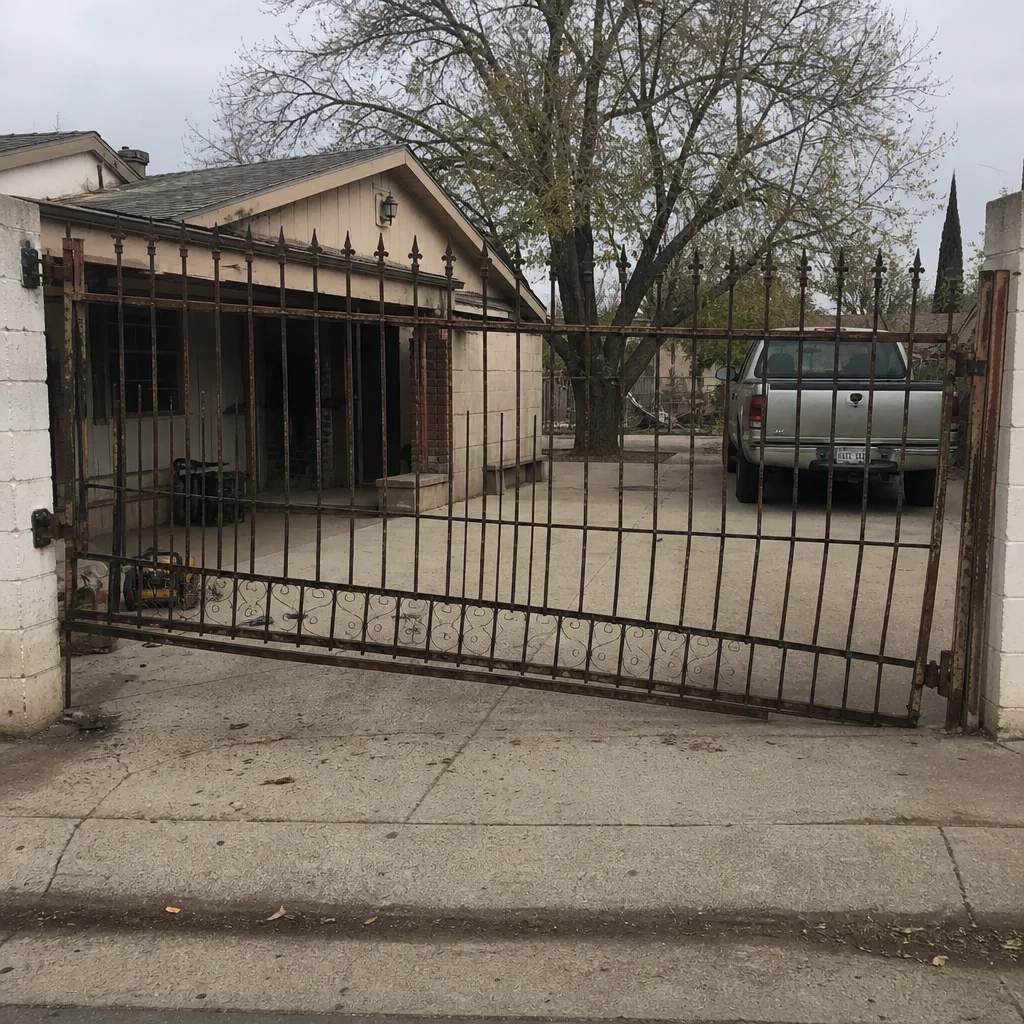 Before
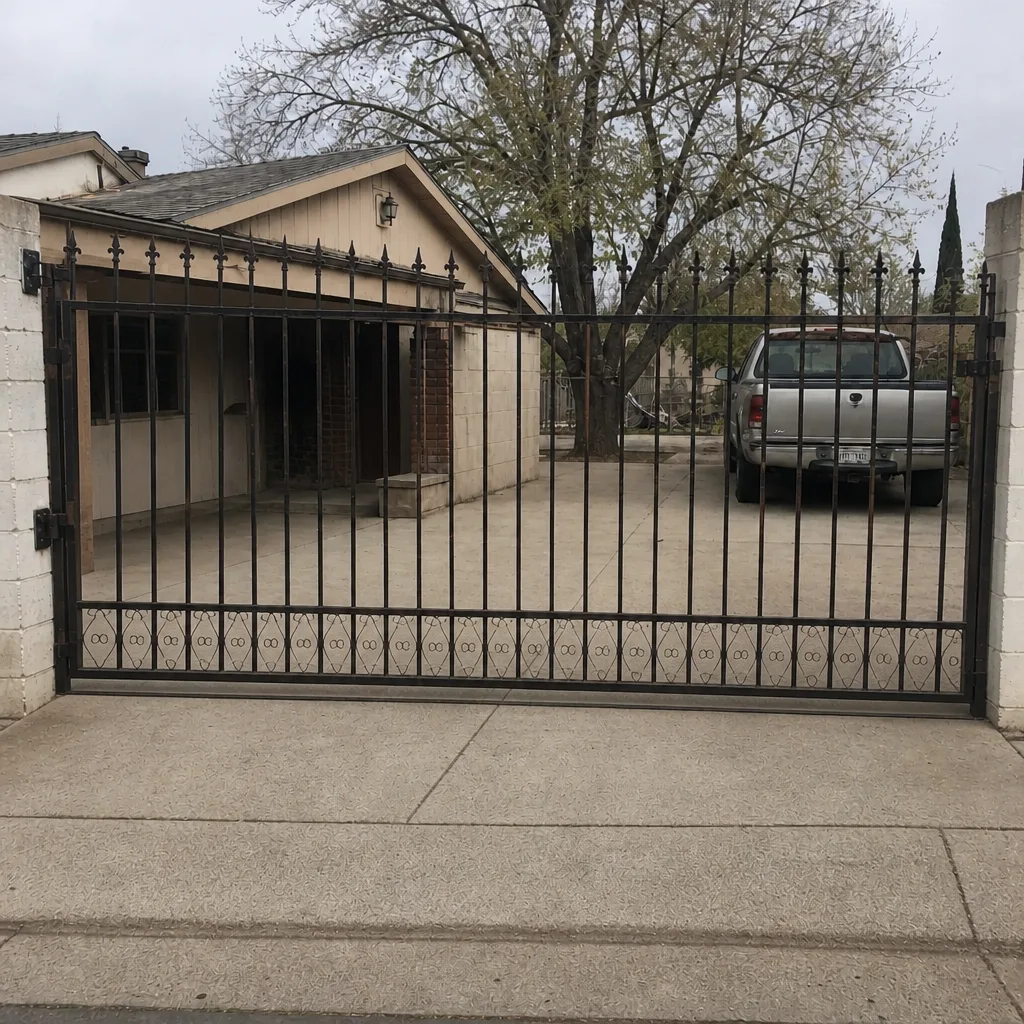 After
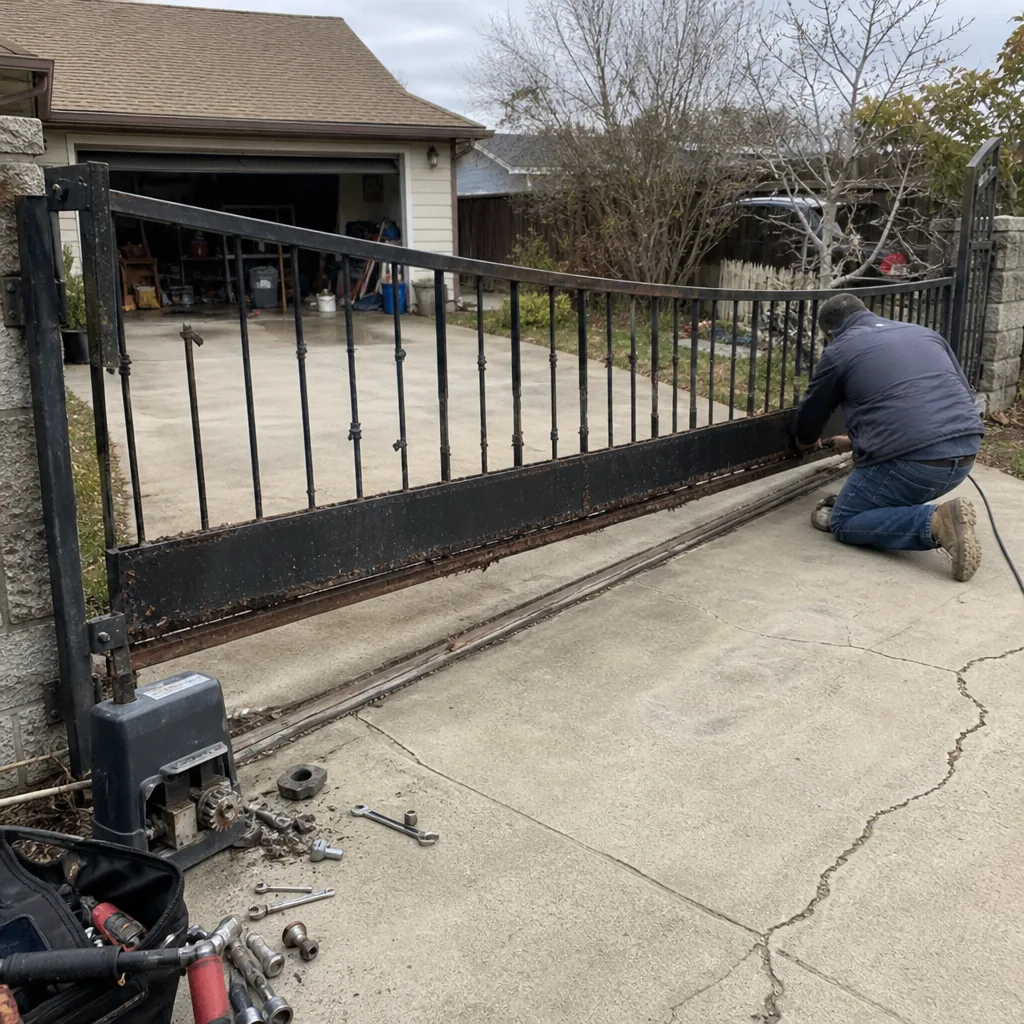 Before
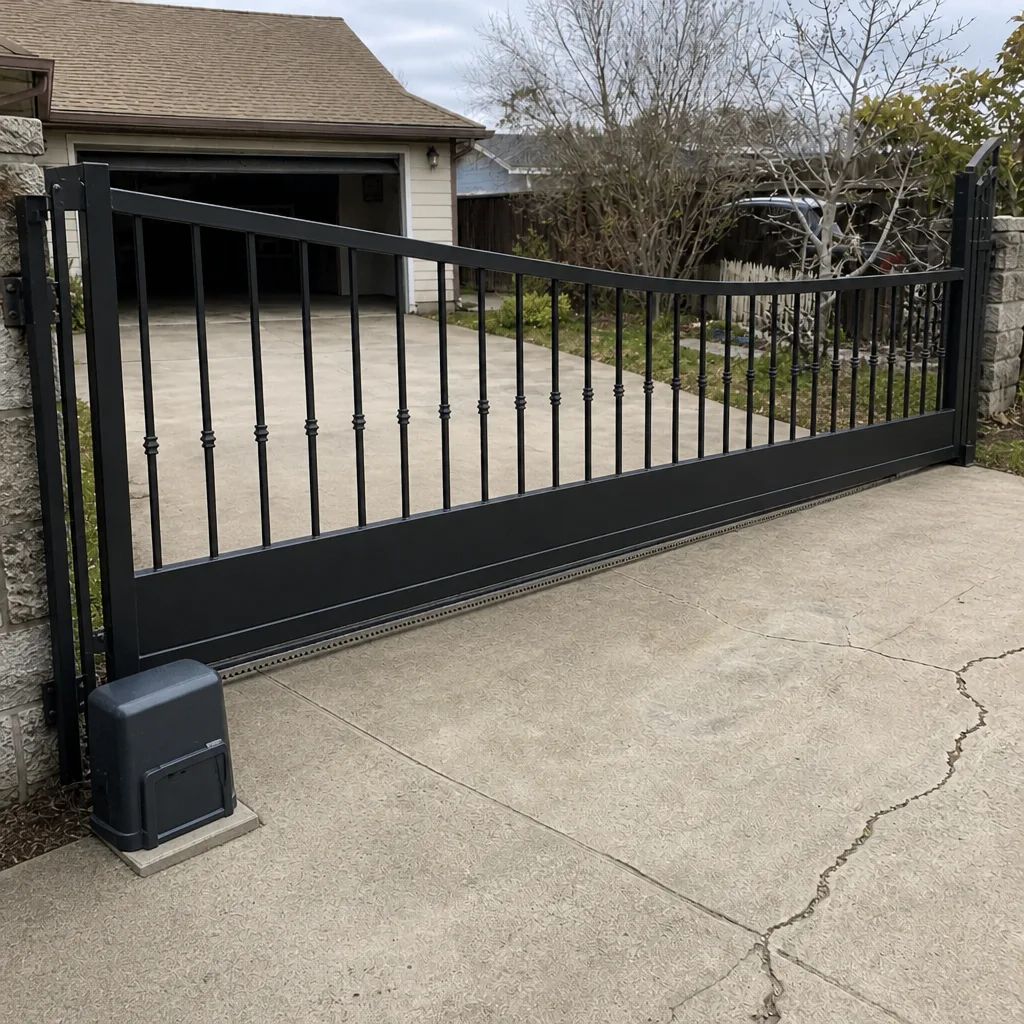 After
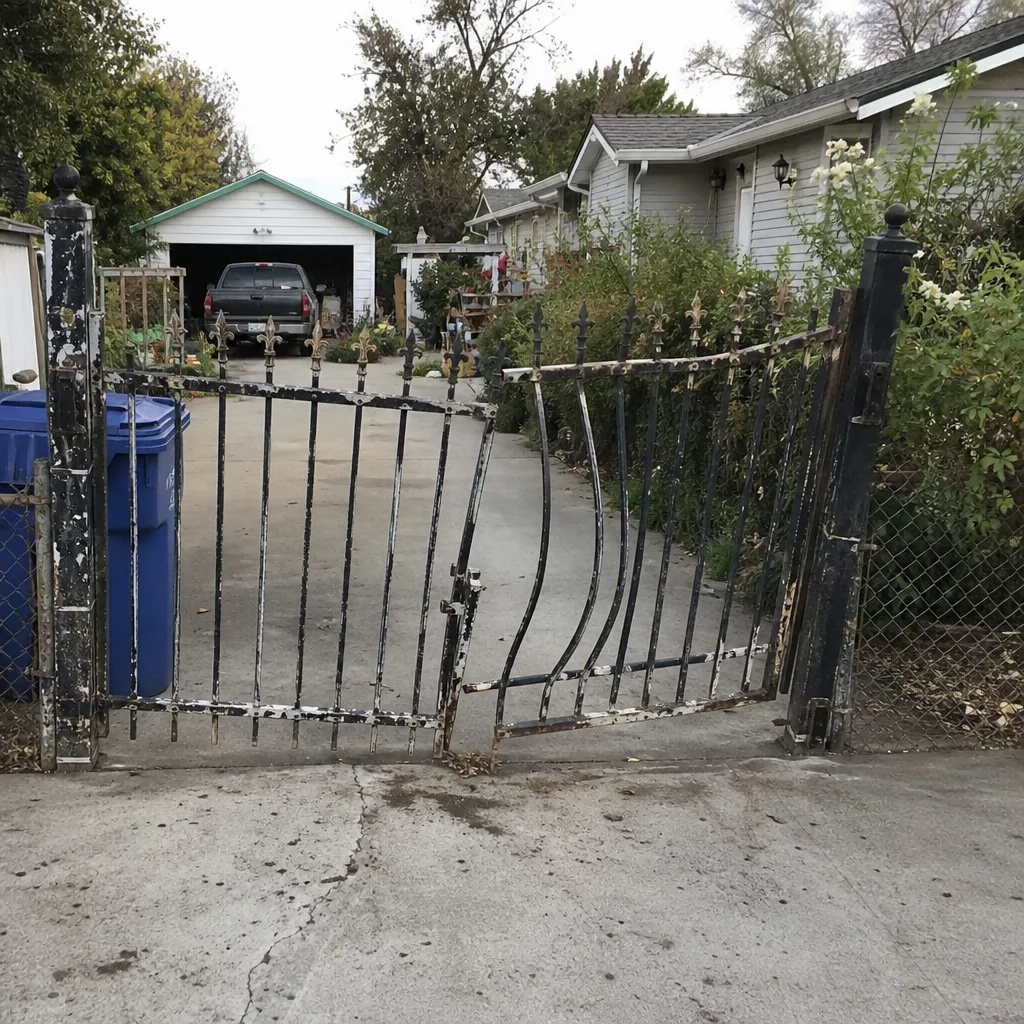 Before
 After
Frequently Asked Questions
Hesitation before the gate moves is the most common sign we see, and it usually means the motor is drawing excess current from a bind in the gate’s travel or a worn component in the operator. Catch it early and the repair is smaller. Call (833) 946-1127 for an exact quote. Estimates are free.
Yes. A symptom that clears on its own is almost always an intermittent fault that will return, often as a larger failure. Note the dates, keep the log going, and have a technician look at it before the next breakdown. Call (833) 946-1127 to book a visit.
Repair pricing depends on the diagnosis, the parts, and the brand, so there’s no single number. We give a free estimate and a written price before any work starts, and that written estimate is what sets the final charge. Call (833) 946-1127 to get an exact quote. Estimates are free.
Yes, and you can often read it yourself first. On most LiftMaster, Mighty Mule, and DoorKing systems the code appears on the control board as an LED pattern or a displayed code, readable through a viewing window with the enclosure closed. Write down what you see and bring it to the call. Call (833) 946-1127 and we’ll use it to speed the diagnosis.
Yes, if the reversal isn’t caused by an actual obstruction. A failing safety sensor or safety edge is more dangerous than a gate without one, because you’re relying on it. Stop the gate and switch to manual until it’s checked. Call (833) 946-1127. A call outside dispatch hours is booked into the next opening, Sunday through Friday, 7am to 7pm.
Three things: the date and time the gate misbehaved, what the gate actually did in plain words, and what you were doing when it happened. That log saves diagnostic time and gives your technician a real starting point. Call (833) 946-1127 to schedule a free estimate.
The Bottom Line
Gate failures don’t appear out of nowhere. They announce themselves through behaviors that are easy to rationalize as a gate that “still works,” and the moment you stop rationalizing is the moment the repair gets smaller. A hesitation is a current draw problem. A reversal is a safety problem. A grinding noise is a mechanical problem. An intermittent symptom that resolves on its own is the most dangerous outcome of all. Keep the log, read the code on the panel if you can, shut the gate down when the symptom touches safety or wiring, and call a specialist when the trend is moving in the wrong direction. Our technicians know these systems from the inside out, and a free estimate is the fastest way to find out whether you’re looking at a small repair or a larger one.
Call (833) 946-1127 for a free estimate. We answer 24/7. Fast dispatch from 7am to 7pm, Sunday through Friday.
Written by the team at Gate Repair Stockton, serving Stockton since 2017.