
Last updated November 14, 2026
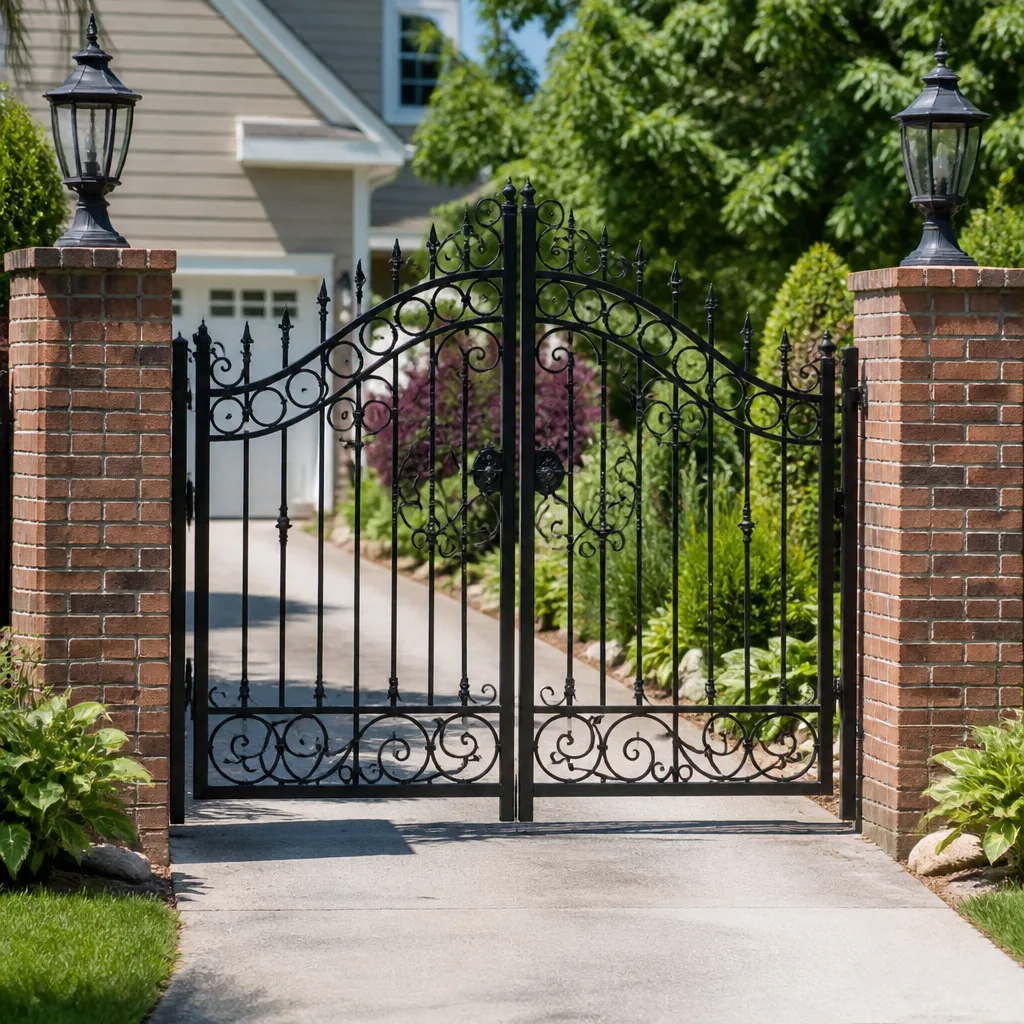 Wrought iron
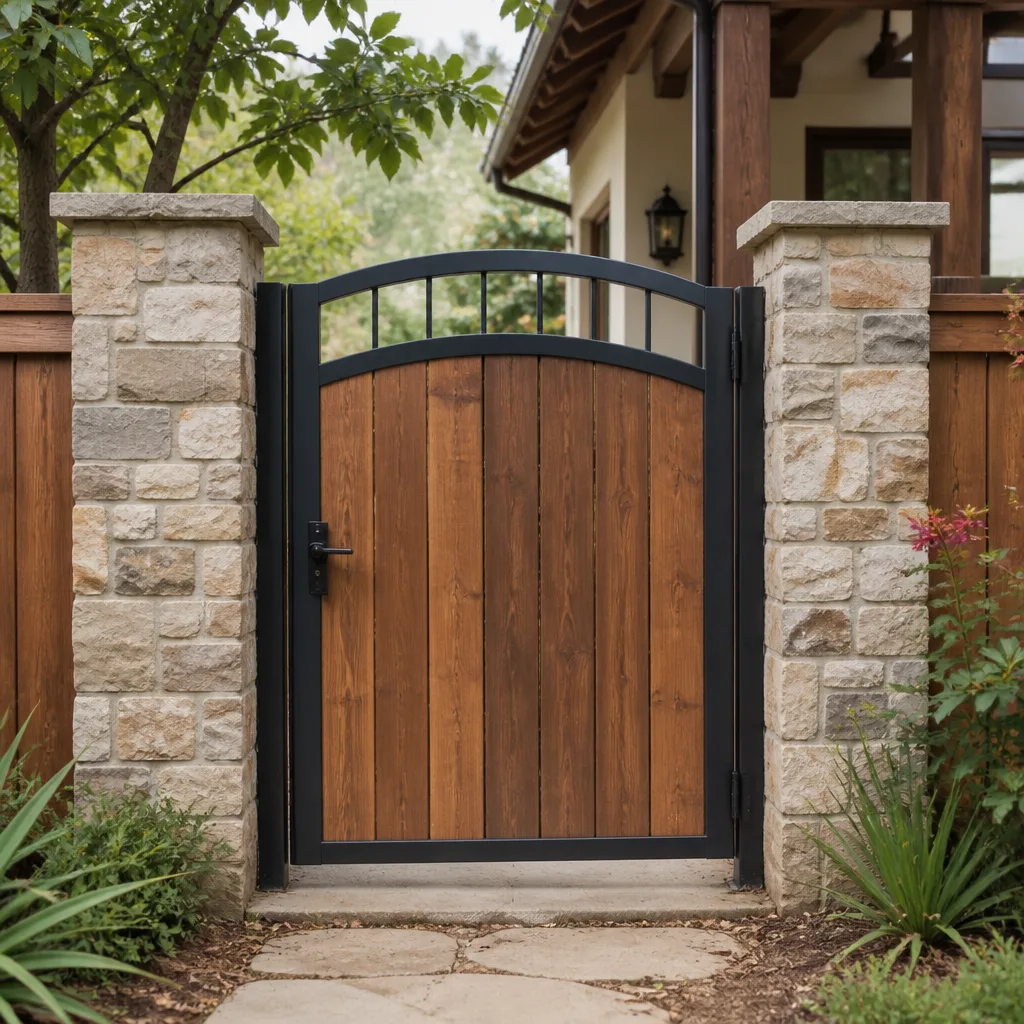 Wood & steel frame
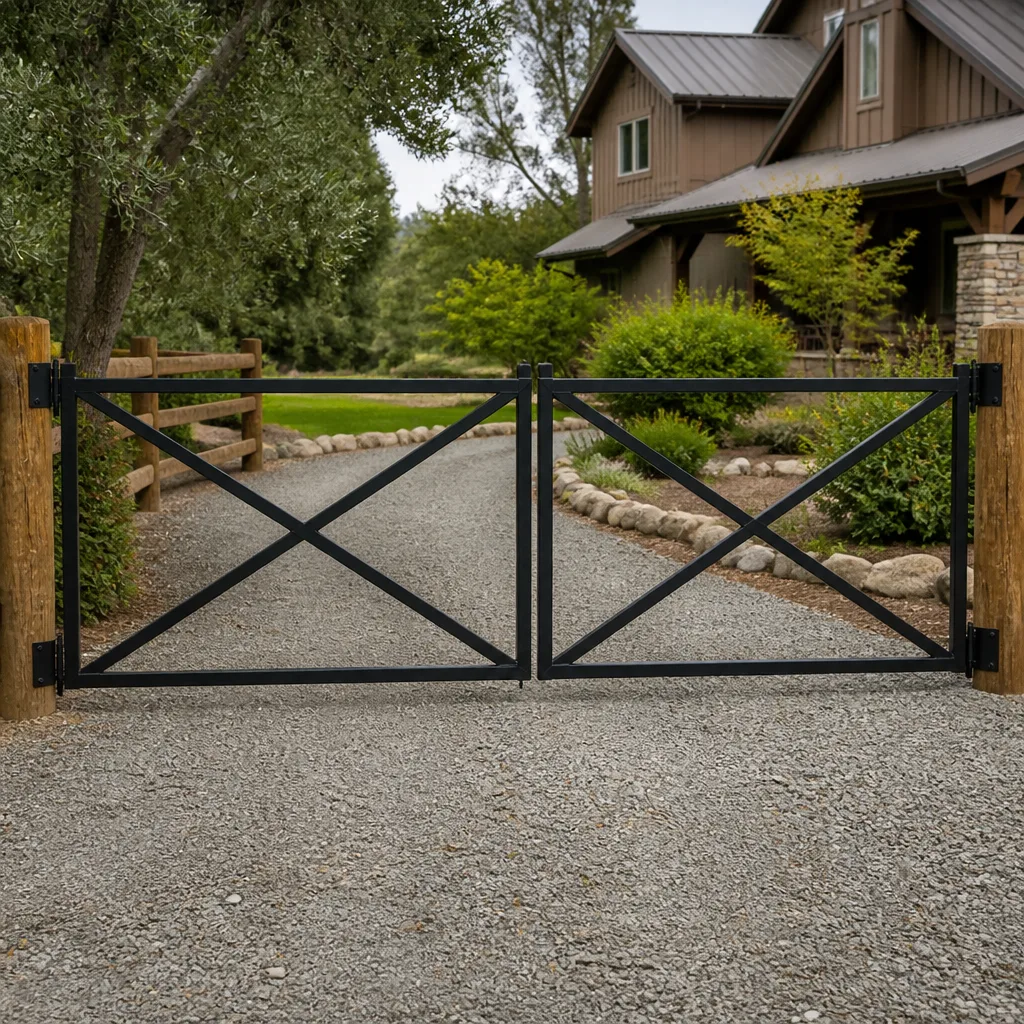 Farm & ranch
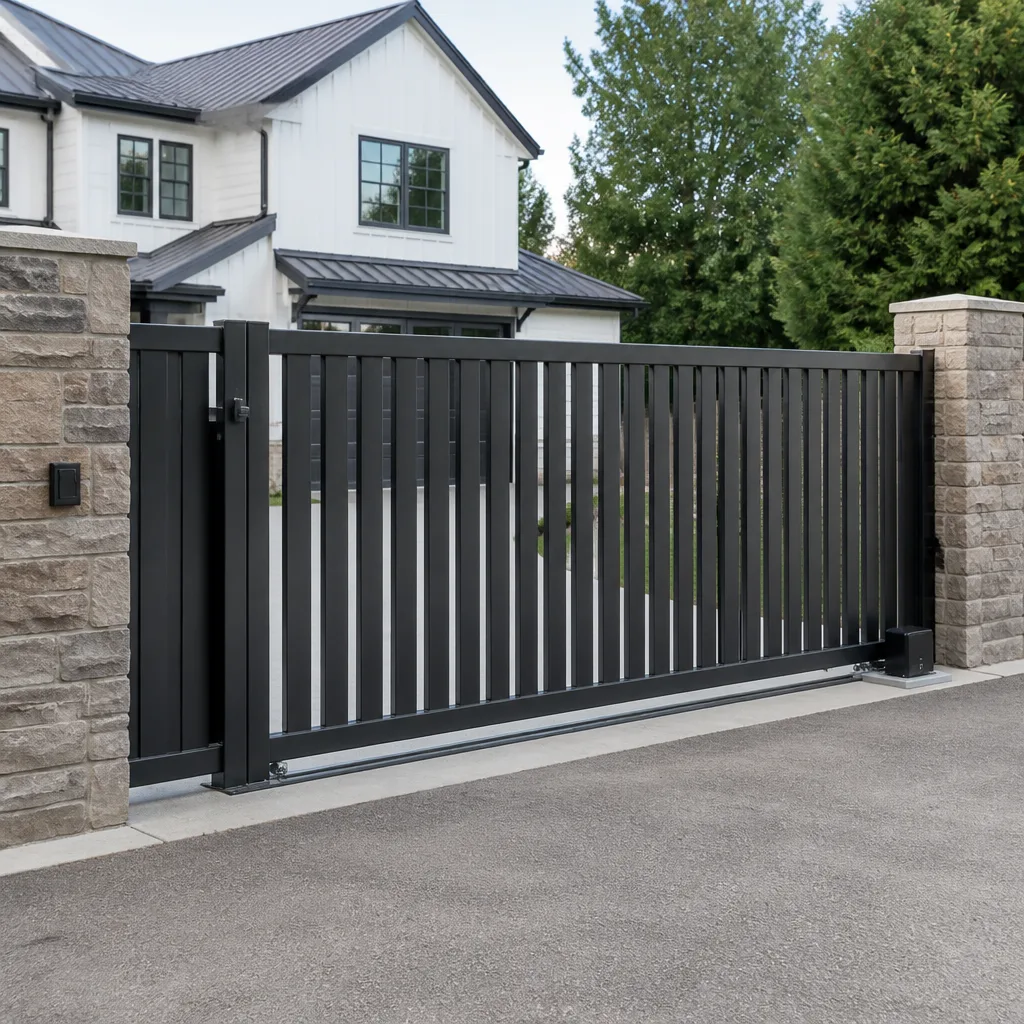 Sliding driveway gates
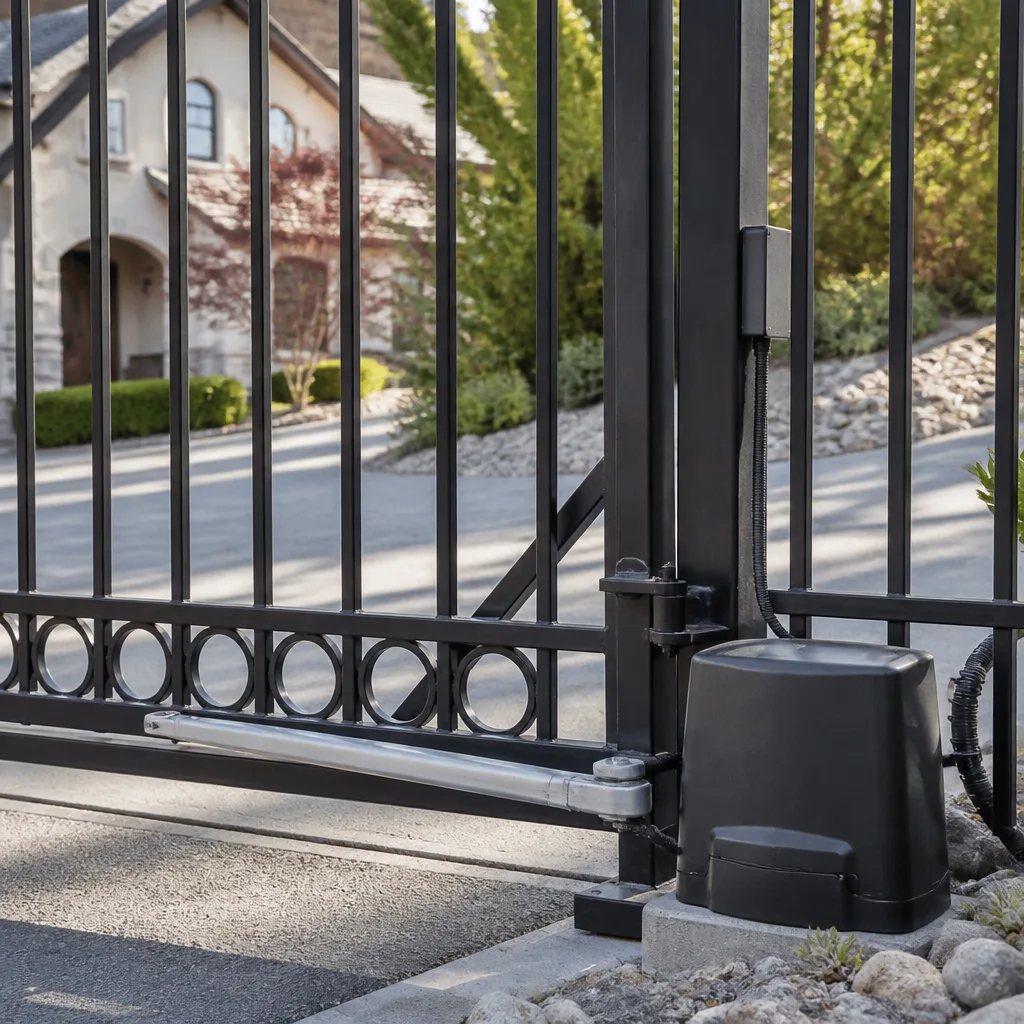 LiftMaster operators
Free on-site gate assessment - hinges, posts, and your LiftMaster or Nice gate operator checked before anything is quoted
The assessment is free and the quote is the invoice.
Get your free estimateGate Repair Emergency Preparedness Guide for Stockton Homes
Every automatic gate has a manual release. Most homeowners find out where it is at 11 PM on a Friday when the power goes out. That’s the part nobody plans for: the gate works fine for months, then a breaker trips or a control board fails and suddenly the property is either sealed shut with the car on the wrong side or wide open with nobody watching. This guide fixes that gap. You’ll learn how to release each gate type safely without wrecking the operator, what your battery backup really covers, and what to have ready before you call anyone. If you’re in a Stockton neighborhood where the summer heat stresses equipment for months, planning ahead matters more than most people realize.
Quick Answer
A gate emergency is a security problem, not just an inconvenience. When a gate fails, your first priority is getting it to a safe position manually without damaging the operator; your second is securing the property; and your third is gathering the specific information – gate type, brand, symptom, and what happened right before the failure – that lets a technician diagnose it quickly. Knowing your manual release now, and what your battery backup actually covers, turns a panic into a ten-minute problem.
Styles & brands we work with
- Wrought iron
- Wood & steel frame
- Farm & ranch
- Sliding driveway gates
- LiftMaster operators
Table of Contents
- Why Automatic Gates Fail at the Worst Time
- How to Release Your Gate Without Power, by Gate Type
- What Battery Backup Actually Covers
- The Emergency Contact Protocol: What to Have Ready Before You Call
- Temporary Security When the Gate Is Stuck Open
- Post-Emergency Checks Before Returning to Automatic Operation
- Preparing Your Gate Before a Big Storm or Heat Wave
- Why Knowing Your Gate Brand Matters in an Emergency
Why Automatic Gates Fail at the Worst Time
Gate failures aren’t random. They cluster around predictable stress points: the operator motor, the control board, the battery, and the safety sensors. Each one behaves differently, and understanding which is which tells you a lot about whether you’re facing a quick fix or a bigger problem.
The motor is the muscle, and it fails in ways you can often hear before you see. A grinding noise, a sluggish start, or a gate that moves unevenly points to the motor or its gears. The control board is the brain, handling the logic that tells the gate when to open, how far, and when to close. When a board fails, you often get a dead gate with a perfectly healthy motor. Batteries and safety sensors round out the list. In our experience across Stockton, more homeowners are surprised by the battery than by the motor. It’s the silent component – it works until it doesn’t, and when it quits, it tends to quit at the exact moment the main power does too.
Stockton’s climate shapes this picture. Long, hot summers put a slow thermal strain on operators, control boards, and batteries that homeowners in milder climates never see. Equipment that sits in direct sun through a valley summer ages faster than its listed service life, and failures often surface during a heat spell when the gate has been cycling multiple times a day.
There’s also a usage pattern to consider. A gate on a busy residential street cycles dozens of times a day; a gate on a quiet property cycles a handful. Both can fail, but the high-cycle gate wears out its mechanical parts sooner, while the low-cycle gate can sit for months and develop problems in the electronics or battery from inactivity. Neither type is immune, and neither is more likely to tell you it’s about to fail.
The Four Components That Cause Most Emergency Calls
- Operator motor and gearbox – mechanical wear, grinding, uneven travel
- Control board – dead gate with a healthy motor, erratic opening or closing
- Battery and backup – gate won’t run when the main power is out
- Safety sensors and access controls – gate reverses unexpectedly, or won’t respond to remotes and keypads
The important takeaway is that a gate failure is rarely a mystery once you know what to listen for. The protocol below walks you through handling each scenario safely.
How to Release Your Gate Without Power, by Gate Type
Every powered gate is designed to be released manually, but the procedure differs by gate type. Doing it wrong can damage the operator or, worse, cause injury. A slide gate carries hundreds of pounds of steel; a swing gate can swing unexpectedly; a barrier arm can drop. Treat every release with caution, and if you’re not sure how your gate releases, stop and consult a technician rather than force it.
Slide Gates
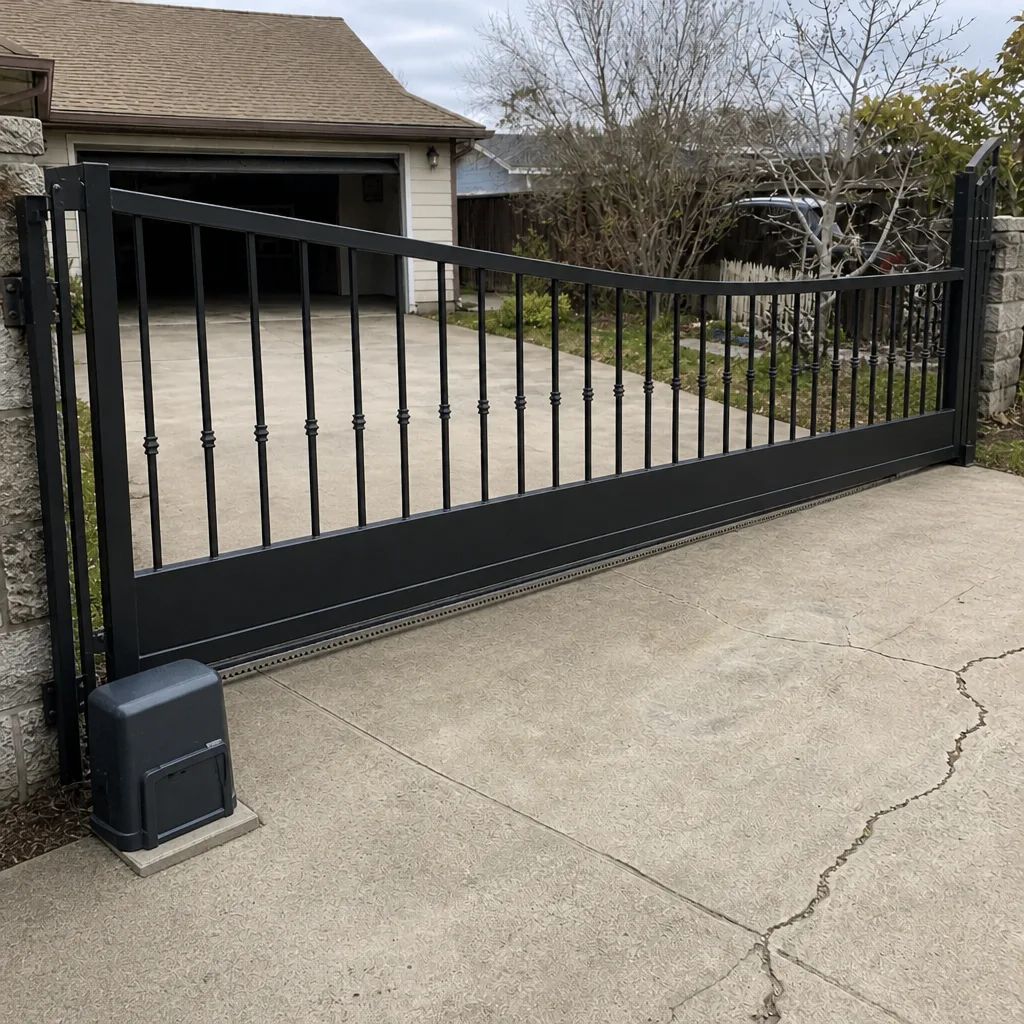
Most slide gate operators have a manual release lever or a key-operated clutch on the operator housing. The sequence is: turn off power at the breaker, locate the release, and follow the operator’s release procedure to disengage the motor from the gate track. Once released, the gate should slide by hand with moderate effort. If it won’t move, don’t force it – a jammed track or a seized wheel is a different problem, and forcing it can bend the gate. The weight of a slide gate is the real hazard here, so keep hands and feet clear of the track and the gate’s path.
Swing Gates
Swing gate operators usually release with a mechanical lever, a key, or a manual override on the arm. Turn off power first, then disengage the operator arm from the gate so the gate swings freely. The danger with swing gates is the heavy panel itself – it can swing faster than expected once released, especially on a slope or in wind. Stand clear of the swing path and control the gate by hand as it moves.
Barrier Arms
Barrier arms are the easiest to release but the most likely to cause a surprise injury. Many have a manual release that lets the arm be raised by hand, and some have a counterweight system. Never stand under the arm during release. Turn off power, disengage the release, and raise or lower the arm deliberately.
The Universal First Step
- Turn off power at the breaker or disconnect.
- Locate the operator’s manual release (consult the operator’s label or manual).
- Follow the release procedure for your specific gate type.
- Move the gate slowly by hand and keep clear of the travel path.
- Once the gate is in a safe position, secure it so it can’t move on its own.
This is the kind of specific release knowledge our technicians work with on every brand, from Viking slide operators to Ghost Controls swing systems. Getting it right the first time is what keeps a power outage from becoming a repair bill.
What Battery Backup Actually Covers
Battery backup doesn’t mean your gate runs normally with the power out. Most backup systems are designed to cycle the gate a limited number of times after an outage, not to run indefinitely. What you get is a window to get vehicles in or out, not a full replacement for grid power.
How long that window lasts depends on the battery’s condition, the gate’s weight, and the ambient temperature. Stockton’s summer heat is the quiet factor most people miss. A battery that sits in a hot operator housing for months loses capacity faster, so the backup that was healthy in spring can be weak by August. The failure that surprises homeowners most is when the backup and the main power fail together – the battery was already near the end of its life, and the outage just revealed it.
What backup typically covers:
- A limited number of open/close cycles right after a power loss
- Keeping the gate in a safe position rather than dead in the travel path
- Access control memory on some boards, so remotes and keypads still work once power returns
What it usually does not cover:
- Running the gate for hours or days without main power
- Powering accessories like lights, cameras, or intercoms for long
- Replacing a failed control board or a dead motor
Ask your technician to check battery health as part of any service visit. A battery test takes minutes and tells you whether the backup you’re counting on will actually be there. If your gate is storm-sensitive during Stockton’s winter rain season, that check becomes more important, not less.
The Emergency Contact Protocol: What to Have Ready Before You Call
The call that gets a gate fixed fastest isn’t the most urgent-sounding one. It’s the one with the right details. Before you call, gather a handful of facts that cut diagnostic time in half.
Have this ready:
- Gate type – slide, swing, or barrier arm
- Brand if you know it – check the operator housing label
- What the gate is doing – stuck open, stuck closed, stuck mid-cycle, cycling erratically, or completely dead
- What happened right before – power outage, storm, unusual noise, recent cycle, or nothing at all
- Any displayed codes or lights – read whatever the control board is showing
- Whether the gate is currently safe – secured, blocked, or still moving
That last one matters most. If the gate is stuck open and the property is exposed, say so first. If it’s stuck closed with a vehicle trapped, say that. The technician can plan around a safety concern if they know about it up front, and that planning saves time on the visit itself.
If you’ve already tried the manual release and it didn’t work, say that too. It rules out one branch of the diagnostic tree before anyone touches the gate.
One more thing: check in on this before an emergency. Most homeowners have no idea where their operator’s label is, or that their gate even has a battery. A five-minute look now, when nothing is wrong, is worth the ten minutes it saves later. That’s the whole point of a preparedness guide.
When you’re ready to have someone take a look, electric gate repair covers motor, control board, and access-system diagnostics, which is where most emergency calls land.
Temporary Security When the Gate Is Stuck Open
A gate stuck open is a security problem, and false comfort is the real risk. A cone or a chair in front of the gate isn’t deterring anyone; it’s telling them nobody’s home. What actually helps is closing off access in a way that requires real effort to defeat.
What helps:
- Physically blocking the gate with a sturdy barrier or a vehicle, if the driveway layout allows
- Lighting the area so the open gate is visible – most intrusions avoid well-lit spaces
- Securing the gate panel itself against free movement, so it can’t be pushed or slid further open
- Notifying neighbors or the HOA if you’ll be exposed for a stretch
What tends to give false comfort:
- Makeshift barriers that look like a deterrent but move easily
- Leaving the gate in a position where it looks closed but isn’t latched
- Assuming the gate will reset on its own after the outage
If you manage an HOA or a commercial property in Stockton, a stuck-open gate is a bigger exposure than for a single home. Get a technician out to secure it properly rather than leaving a temporary fix in place longer than a day or two. For homeowners, the temporary measures above buy you time – they don’t replace a repair.
This is also the point where calling for an on-site estimate makes sense, because what you’re really asking is “how do we get this back to automatic safely,” and that answer depends on the gate.
Post-Emergency Checks Before Returning to Automatic Operation
Once power is restored or the gate is back in position, resist the urge to just flip the switch and drive away. A gate that failed can leave damage behind, and running it automatically before you’ve checked puts that damage in motion.
Run these checks before returning the gate to automatic operation:
- Look at the travel path – is anything in the way, or was anything bent during the manual release?
- Inspect the gate panel – squeaks, wobbles, or a gate that no longer sits level
- Check the battery – if it was near end of life, replace it before assuming the backup will hold next time
- Cycle the gate once manually – with power still off, confirm it moves freely and smoothly
- Power it back up and cycle it slowly – watch the full open and close, not just one direction
- Test the safety sensors – walk through the beam path and confirm the gate reverses or stops
- Test every access point – remotes, keypads, and any intercom or access system
If the gate reverses unexpectedly, grinds, or won’t complete a full cycle, stop and call a technician before running it again. A gate that fails post-emergency is usually telling you something – a control board that didn’t reset, a safety sensor that’s misaligned, or a battery that’s already gone.
This is exactly the kind of diagnostic work we do across Stockton, and it’s gate repair that starts with the system, not a guess.
Preparing Your Gate Before a Big Storm or Heat Wave
There’s a moment before a storm or a heat wave when a five-minute check saves a repair. Stockton gets both, and the gate feels them before you do.
Before a storm:
- Clear debris from the track and the gate’s travel path
- Check that the gate is latched and secure against wind
- Confirm the battery is healthy, since storms are when outages hit
Before a heat wave:
- Look at the operator housing – is it in direct sun all day, and is the cover intact?
- Listen for grinding or sluggish movement that heat aggravates
- Confirm the safety sensors are clean and aligned, since dust and heat both affect them
None of this requires training. It’s about knowing where to look and doing it while the gate is still working. A gate that’s scheduled for inspection before the season changes is a gate that’s less likely to fail in the middle of it. That’s the difference between a scheduled visit and an emergency call, and it’s the simplest form of preparedness there is.
If your gate is reaching the end of its working life and you’re weighing your options, Gate Repair Stockton covers repair and replacement paths so you can compare them without a sales pitch.
Why Knowing Your Gate Brand Matters in an Emergency
Two gates can look identical and behave completely differently in an emergency, because the release procedure, the control board logic, and the battery system all depend on the manufacturer. That’s why brand fluency isn’t a marketing point for a gate specialist – it’s the difference between a fix and a guess.
We work on nine of the most widely installed residential and commercial gate brands, including DoorKing operators on many commercial and HOA properties, Ghost Controls swing systems on residential driveways, and Viking and Elite units that come up across Stockton. Each has its own release procedure, its own diagnostic codes, and its own parts. Knowing those differences is what lets a technician ask the right questions on the phone and bring the right parts on the visit.
The alternative – a generalist guessing at your system – usually means a longer visit, more swap-and-see diagnostics, and a higher chance of the wrong part. That’s the gap this guide is trying to close. You can go into an emergency knowing your gate, instead of learning about it afterward.
If you’re in the market for a new gate or a system replacement rather than a repair, Stockton is where we’re rooted, and installation is one of our three core services alongside repair and electric repair.
Common Mistakes to Avoid
- Forcing a manual release that won’t move. If a release lever won’t disengage, the problem is mechanical, not stubbornness. Forcing it bends gate frames and breaks operators, and it’s the most expensive mistake on this list.
- Assuming the battery backup will cover the whole outage. Most backup systems give you a handful of cycles, not full operation. Stockton summers shorten battery life faster than most homeowners expect.
- Calling without the gate’s details. “It’s broken” gets a longer visit than “DoorKing slide gate, stuck mid-cycle after the power came back, control board showing a red light.” The second one gets the technician out faster.
- Leaving a gate stuck open with a makeshift barrier. False security is worse than visible exposure. A cone doesn’t deter intrusion, but it does affect how long you wait to call.
- Flooding the operator housing. Hosing down the operator during summer cleaning is a common way to kill a control board. Clean the track, not the electronics.
- Skipping the post-emergency cycle test. Running the gate automatically without a full open-and-close watch is how small problems become big ones.
- Ignoring the safety sensors. A gate that reverses unexpectedly is not a nuisance; it’s a safety system telling you something is misaligned or failing.
See the difference
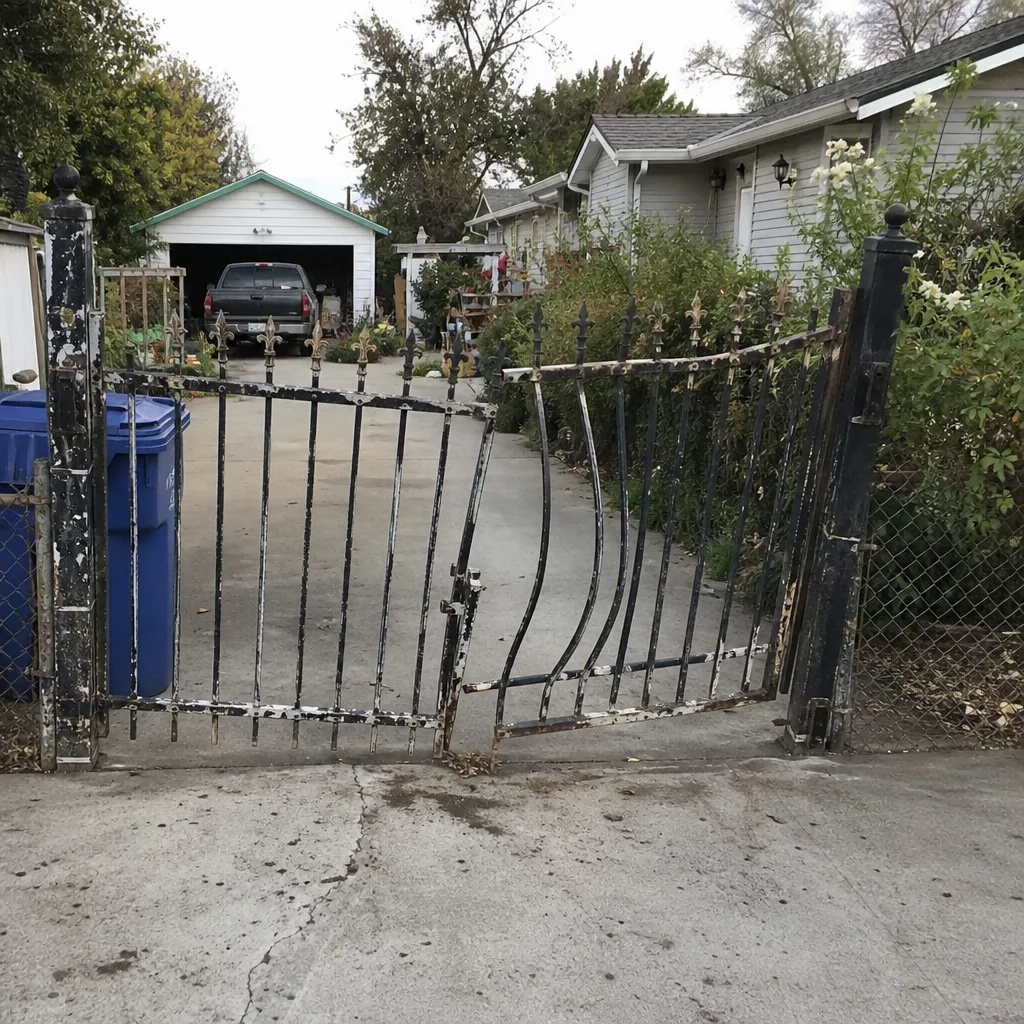
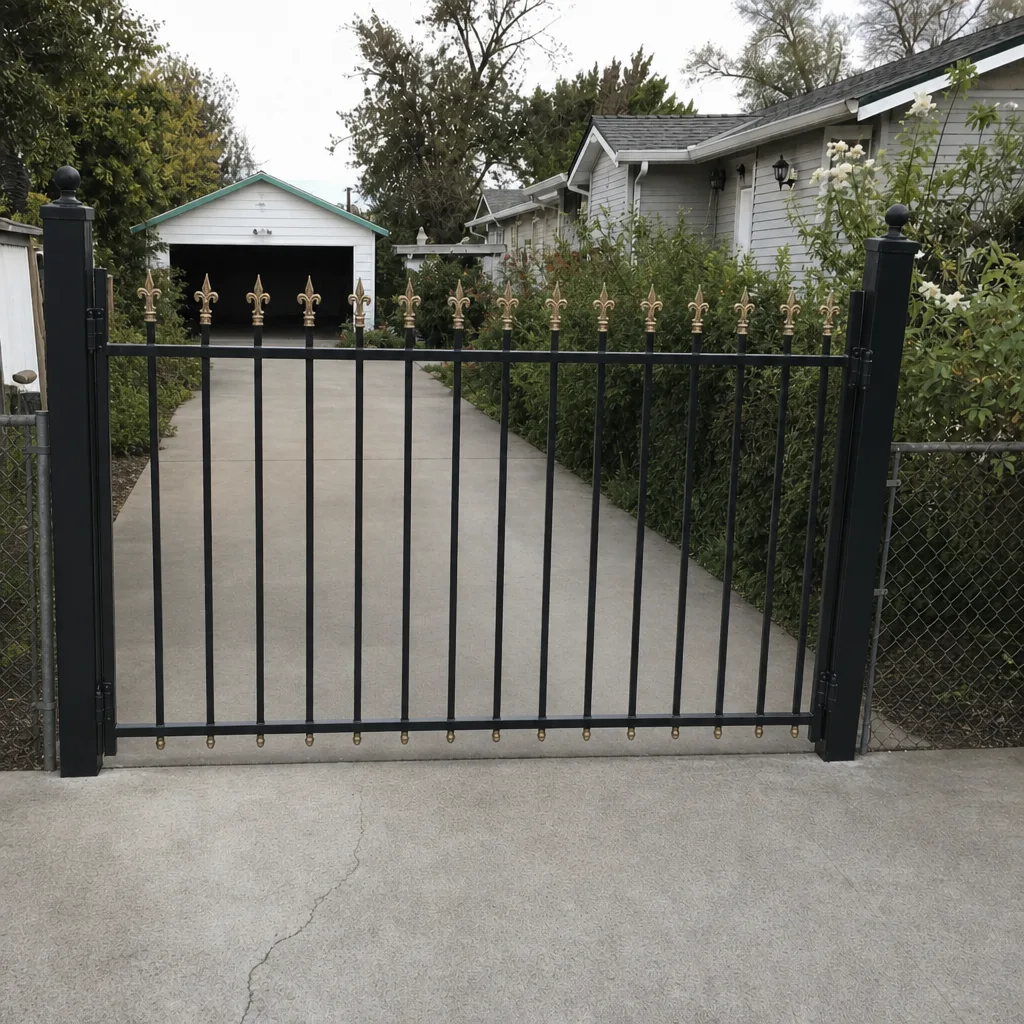
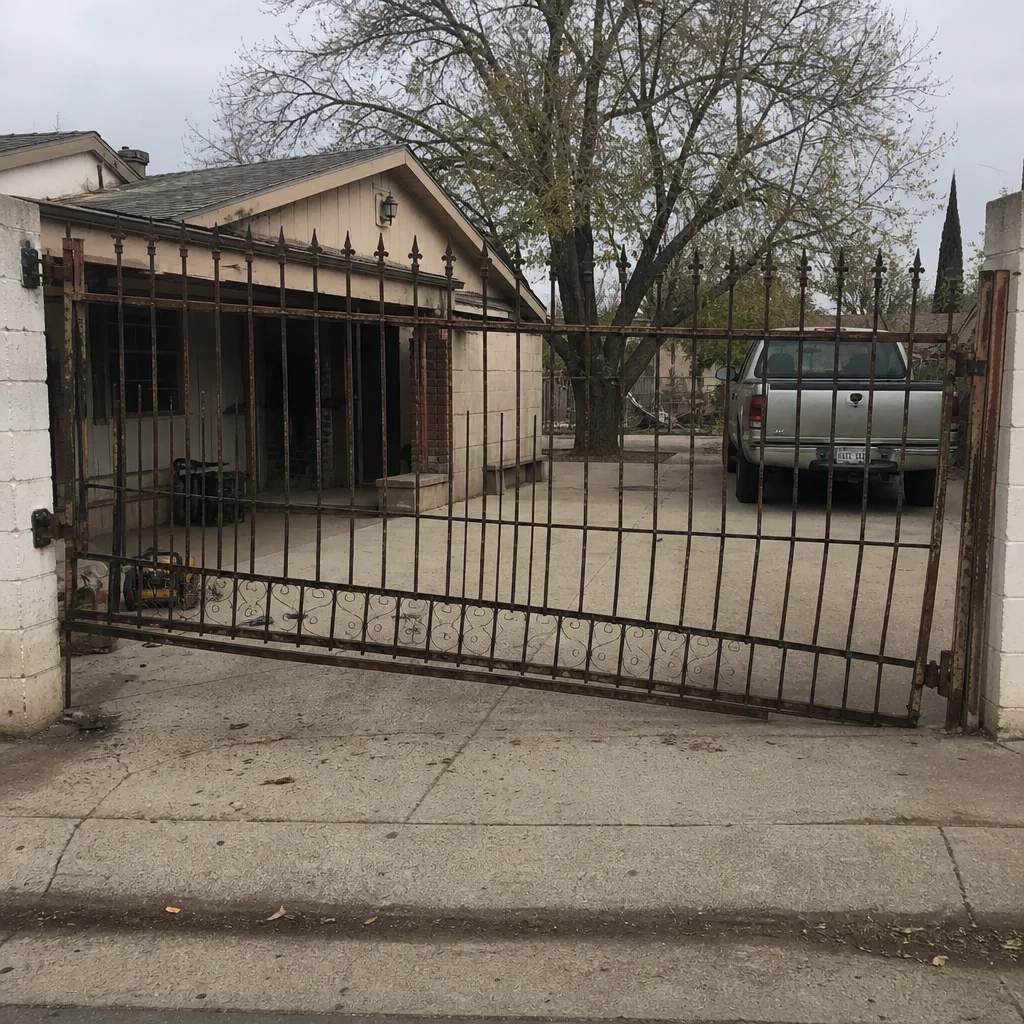 Before
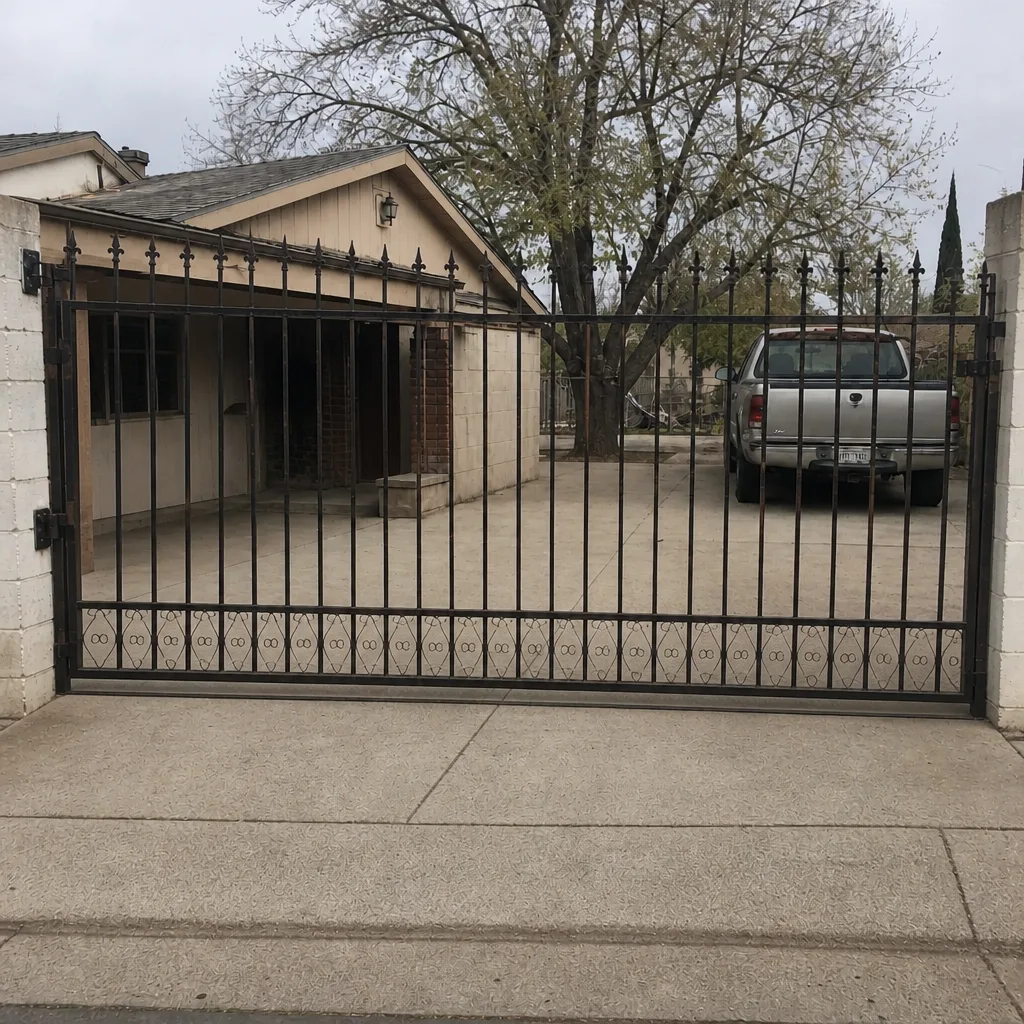 After
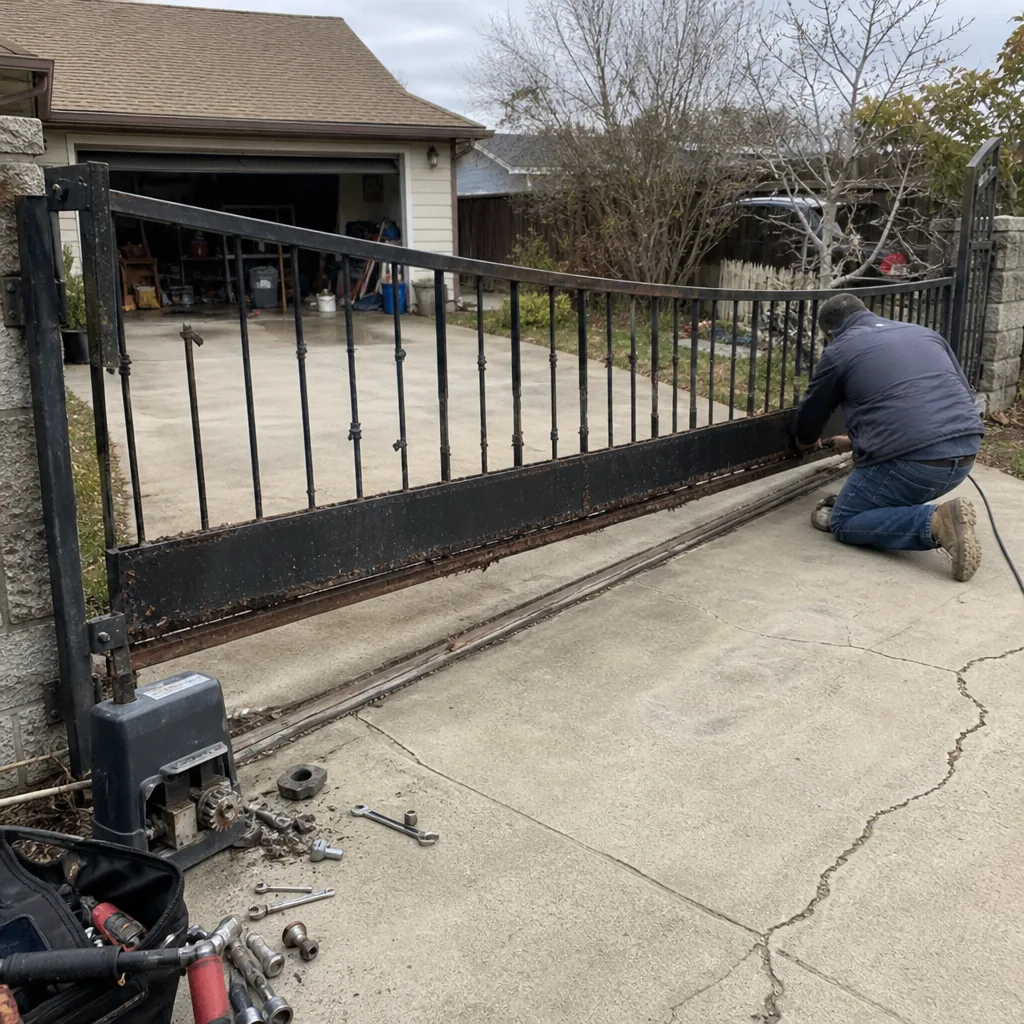 Before
 After
 Before
 After
When to Call a Professional
Some gate problems are handled with a phone call and a manual release. Others need a technician, and knowing which is which saves time and money. Call us if the manual release won’t disengage, if the gate is stuck mid-cycle, if the control board is showing fault codes, if the gate reverses unexpectedly, or if you can hear grinding or uneven movement. Call us if a gate is stuck open and you manage an HOA or commercial property – a temporary barrier isn’t enough. Call us if the battery backup didn’t hold when it should have, or if you don’t know how your gate releases and want to learn before the power goes out. There’s no need to wait for a total failure; a scheduled look at a gate that’s behaving oddly is cheaper than an emergency repair. Gate Repair Stockton offers free estimates in Stockton – call (833) 946-1127.
Frequently Asked Questions
Turn off power at the breaker, locate your operator’s manual release, and follow the release procedure for your gate type – slide gates disengage the motor from the track, swing gates release the operator arm, and barrier arms have a manual raise. Then move the gate slowly by hand and secure it in place. If the release won’t engage or the gate won’t move freely, stop and call a technician rather than forcing it. Call (833) 946-1127 for an exact quote, estimates are free.
Because the battery backup was already weak or dead before the outage hit. Stockton’s summer heat shortens battery life, so a backup that was fine in spring can be near the end by the time an outage tests it. A quick battery check during any service visit tells you whether the backup will actually be there.
You can secure it temporarily, but you can’t safely restore automatic operation without diagnosing why it failed. Blocking the opening, lighting the area, and securing the gate panel are the right temporary measures; anything beyond that is a technician job. On a slide gate especially, the panel weight makes DIY work risky. Call (833) 946-1127. We answer 24/7. Fast dispatch from 7am to 7pm, Sunday through Friday.
Often, yes. A general handyman may not know the release procedure or control logic for a DoorKing, Ghost Controls, Viking, or Elite system, and that unfamiliarity leads to slower diagnostics and wrong parts. That’s why gate repair is a specialist trade. Call (833) 946-1127 to get an exact quote, estimates are free.
Run a full cycle test before putting the gate back into automatic operation: check the travel path, inspect the gate panel, verify the battery, cycle the gate once manually, then power up and watch the full open and close. Test the safety sensors and every access point last. If anything looks off, stop and have it looked at.
Yes. We work on manual and electric or automated systems alike, from residential swing gates to commercial slide gates and barrier arms. That range matters in an emergency, because the safe way to release or secure a gate depends entirely on which type it is. Call (833) 946-1127 to book a free estimate. We answer 24/7.
The Bottom Line
A gate emergency becomes manageable the moment you know your system. Find your manual release before you need it, check your battery backup before the power goes out, and have your gate’s brand, type, and symptom ready when you call. Those three things cut diagnostic time and keep a small failure from turning into a security problem. Gate repair isn’t a generalist trade, and neither is knowing your gate. If something’s off, or if you just want to be prepared before it is, we’re here. Call (833) 946-1127 for a free estimate. We answer 24/7. Fast dispatch from 7am to 7pm, Sunday through Friday.
Written by the team at Gate Repair Stockton, serving Stockton since 2017.