
Last updated November 14, 2026
 Wrought iron
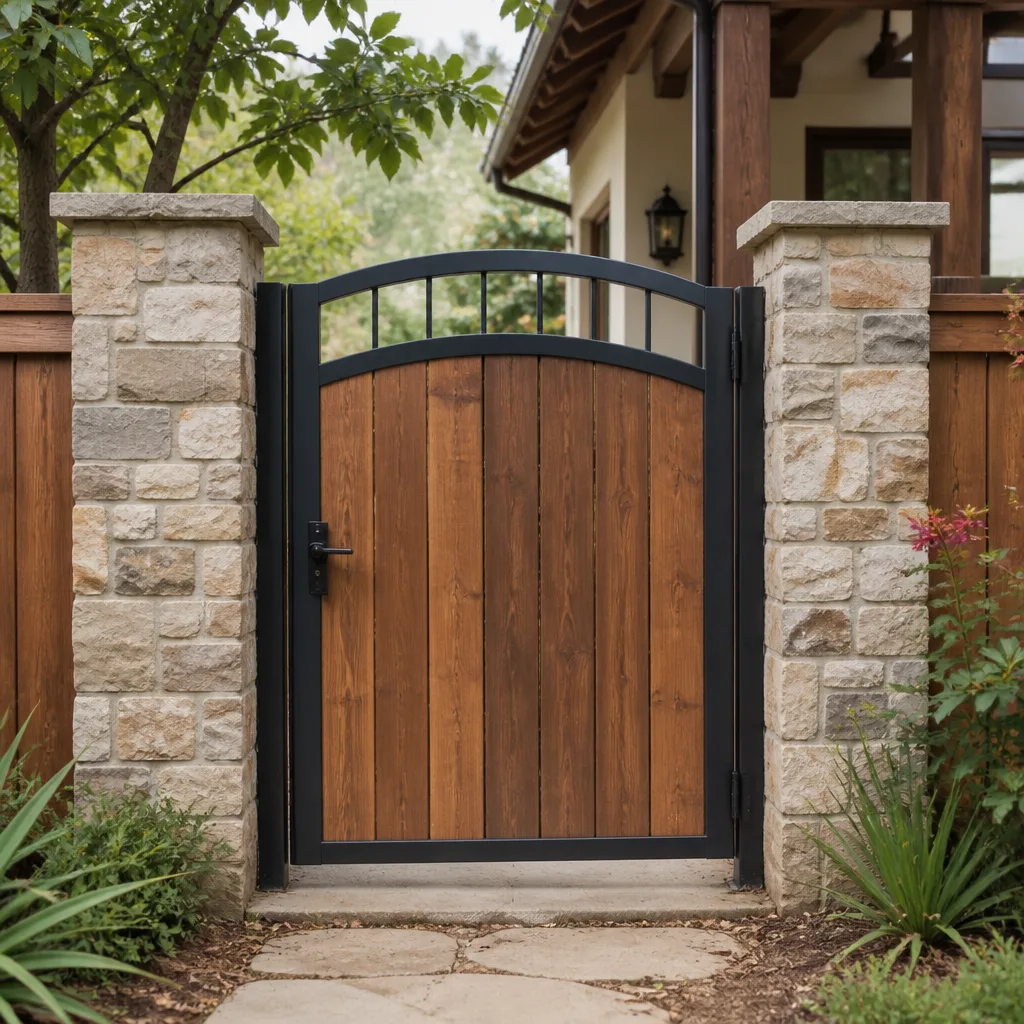 Wood & steel frame
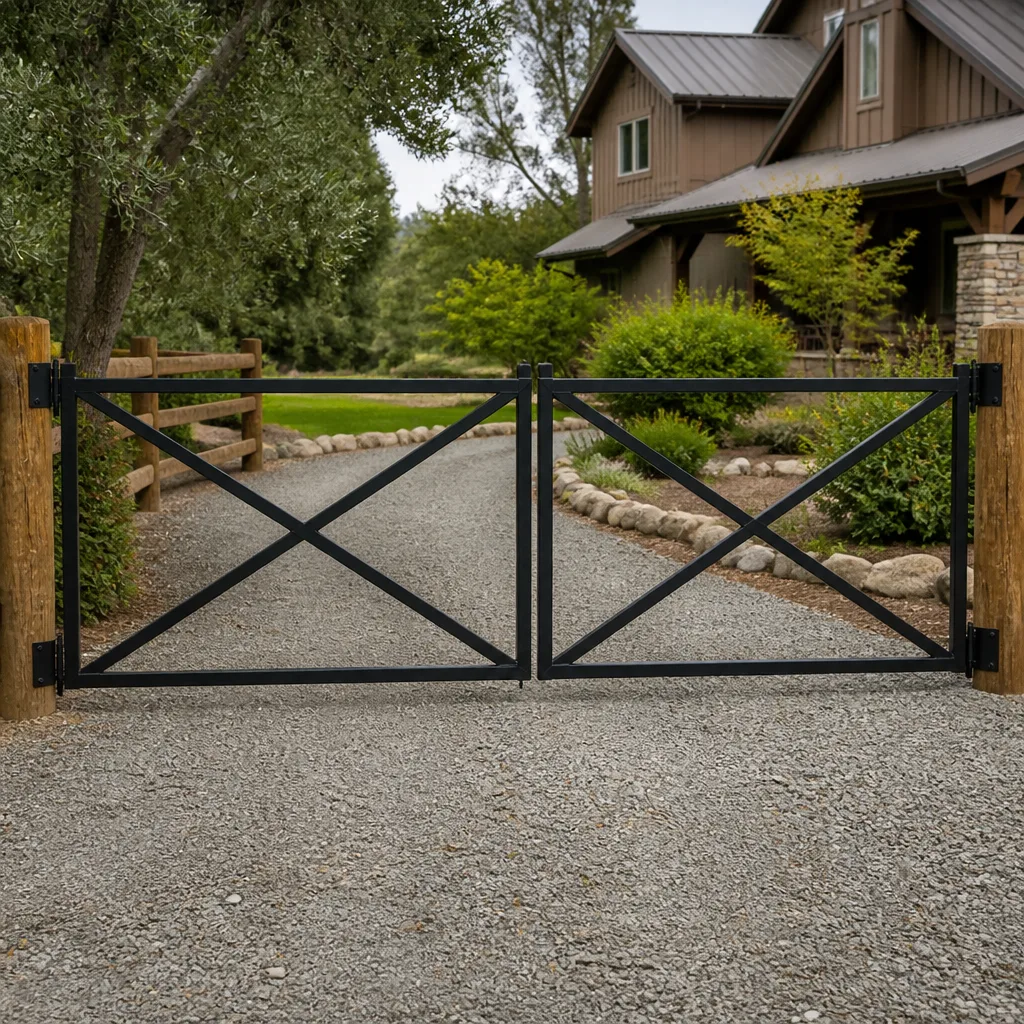 Farm & ranch
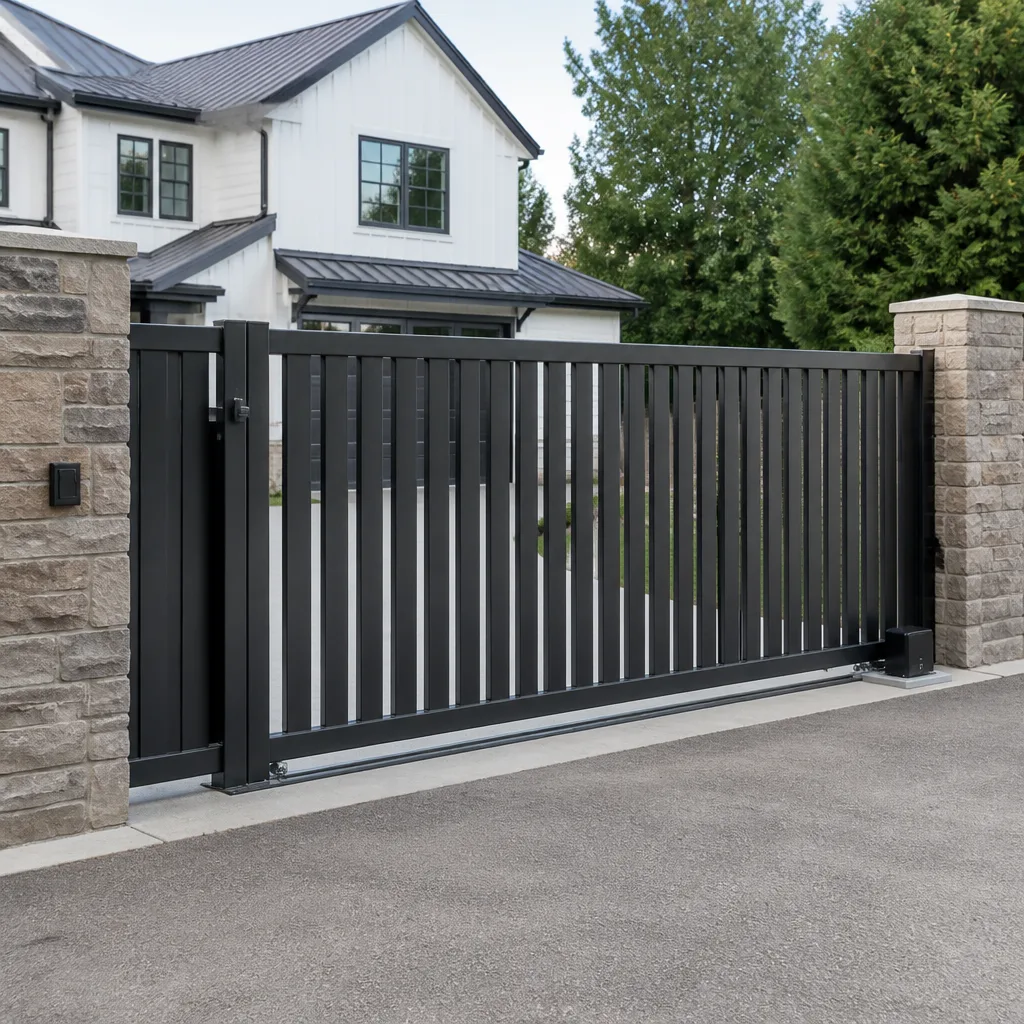 Sliding driveway gates
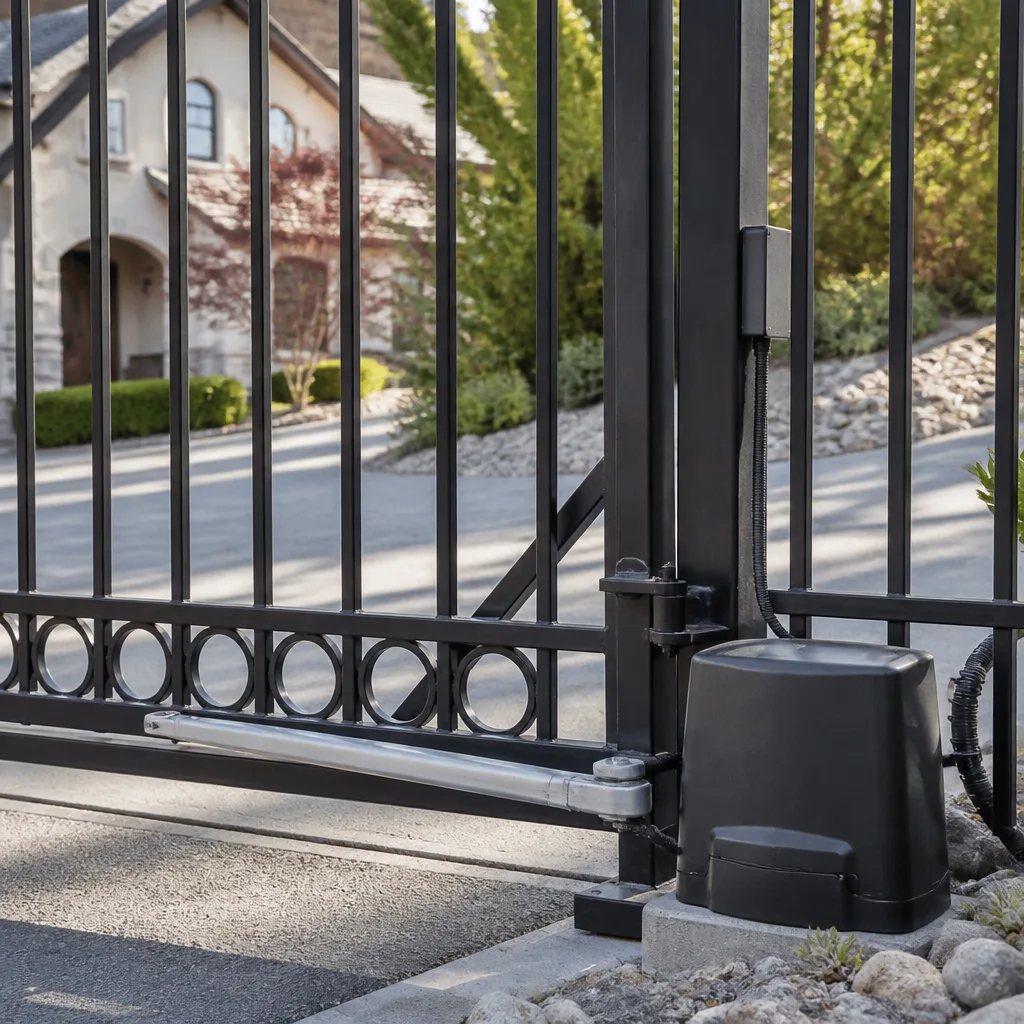 LiftMaster operators
Free on-site gate assessment - hinges, posts, and your LiftMaster or Nice gate operator checked before anything is quoted
The assessment is free and the quote is the invoice.
Get your free estimateGate Repair Permits, Codes & Inspections in Stockton, CA: What You Need to Know
Most gate repairs in Stockton need no permit at all. Replacing a hinge, a latch, a roller, a control board, a photo eye, or a keypad is repair work, and repair work doesn’t go to the building department. Here’s the uncomfortable part: the jobs that do require a permit are the ones property owners most often skip, because the gate still opens afterward and nobody ever asks. An unpermitted motor replacement won’t fail an inspection, since no inspection is ever scheduled. It surfaces later, when an insurer asks for documentation after a property-damage claim or an injury, or when a buyer’s agent pulls the permit history before closing. This guide draws the line clearly. You’ll learn what triggers a City of Stockton permit, what Title 24 and UL 325 actually require of an automatic operator, how HOA rules layer on top, and how to fix a gate installation a previous owner left undocumented.
Quick Answer
In Stockton, replacing a gate in kind, repairing hardware, or swapping a like-for-like operator usually does not require a building permit, but a new gate installation, a change in gate size or location, new electrical service to the operator, or a change in how the gate functions typically does. What matters more than the permit itself is UL 325 entrapment protection and California Title 24 compliance on any automatic operator, because that’s where liability lives. When in doubt, call the City of Stockton Building Division and describe the exact scope in one sentence.
Styles & brands we work with
- Wrought iron
- Wood & steel frame
- Farm & ranch
- Sliding driveway gates
- LiftMaster operators
Table of Contents
- Where the Permit Line Falls in Stockton
- California Title 24 and UL 325: What Compliant Actually Means
- HOA Overlay Rules on Top of City Code
- What Unpermitted Work Does to Your Insurance Coverage
- How to Permit a Gate a Previous Owner Installed
- What a Gate Inspection Actually Looks At
- Stockton Conditions That Shape Gate Work
- Common Mistakes to Avoid
Where the Permit Line Falls in Stockton
The City of Stockton Building Division draws the line at structural and electrical scope, not at anything that moves. If the gate frame, footing, or operator wiring stays as it was, you’re doing repair. If you’re changing any of those, you’re doing construction, and construction goes through the permit process. This is the same principle most California cities apply, and it holds whether the gate is at a single-family home near Lincoln Village or at a commercial lot off Charter Way.
Work that’s generally classified as like-for-like repair (no permit):
- Replacing hinges, rollers, latches, catches, and drop rods on a manual gate
- Straightening or re-welding a damaged gate frame that stays in the same location
- Swapping a control board, photo eye, keypad, or receiver in an existing operator
- Replacing a motor or arm on an operator where the wiring, footing, and gate remain unchanged
- Adjusting travel limits, force settings, and close delays
Work that typically requires a permit:
- Installing a new gate where none existed
- Changing the gate’s width, height, location, or swing/slide configuration
- Running new electrical service or a new conduit run to an operator
- Building or replacing a footing or post foundation
- Converting a manual gate to automatic operation
Two of those deserve a flag. New electrical work to an operator is an electrical permit matter, and it’s not something a gate technician signs off on alone. And converting manual to automatic is a functional change, not a repair. Both are common in Stockton, where plenty of older properties have manual gates someone wants motorized. We’ve seen the assumption that “it’s still the same gate” carried too far in both cases. The safe move is a single phone call to the Building Division with your scope in one sentence: “I’m replacing a sliding gate motor, same location, same wiring.” They’ll tell you quickly.
For general repairs that stay on the repair side of the line, our gate repair work covers manual and motorized systems without touching permit scope.
California Title 24 and UL 325: What Compliant Actually Means
Here’s the distinction that trips people up: a permit is about the city, and compliance is about the state and the safety standard. You can skip the permit and still be required to meet Title 24 and UL 325. Title 24 sets energy and construction requirements for automatic gate operators in California, and UL 325 is the safety standard governing entrapment protection. An operator that doesn’t meet UL 325 is non-compliant regardless of whether anyone ever inspected the install.
UL 325 is built around the idea of entrapment zones: the spaces where a moving gate can catch a person, a vehicle, or an animal. Compliance means every one of those zones is protected by a device that stops and reverses the gate. In practice, on a Stockton residential slide gate, that means:
- Primary protection. The operator’s inherent design must limit force or provide a means to detect an obstruction.
- Secondary protection. At least one external device, typically a photoelectric eye pair, must guard the closing path.
- Edge protection on swing gates. A reversing edge or equivalent on the leading edge of a swinging leaf.
- Placement. Photo eyes and edges need to be mounted so they actually cover the entrapment zone, not just wherever they fit.
- Verification. The installer or technician tests obstruction response and confirms the gate reverses before calling the job done.
“Compliant” is not a sticker or a checkbox. It’s the whole system working together: correct devices, correct placement, correct force settings, and correct testing. A gate with a photo eye bolted to the post but never wired into the control board is not compliant, and it may look fine at a glance. Modern operators from BFT and Linear, along with LiftMaster and FAAC, are designed around these requirements, but design and installation aren’t the same thing. What separates a compliant install from a non-compliant one is usually the technician’s setup and testing, not the box.
If your operator is older, or if you’ve had a control board replaced by whoever was available, it’s worth having the safety devices checked against the current standard. That’s part of the electric work we do in electric gate repair, and it’s the piece most likely to be missing on an inherited install.
HOA Overlay Rules on Top of City Code
City code is the floor, not the ceiling. If your property sits in a Stockton-area community with a homeowner’s association, the HOA’s architectural rules sit on top of everything the city requires, and they can stop a project the city would happily permit. This is where a lot of gate work gets derailed after the permit has already been issued.
HOA gate rules typically cover three areas:
- Aesthetics. Gate style, material, color, finish, height, and visibility from the street. A modern black ornamental gate may pass city code and still fail the architectural committee because it doesn’t match the community standard.
- Equipment restrictions. Some associations specify or restrict operator brands or require that equipment be screened from view. Even when a brand isn’t named, the association can require that a motor or control box not be visible from common areas.
- Access and shared infrastructure. If your gate opens onto a shared drive, a common area, or a community access road, there are likely easement terms and access-control requirements in the CC&Rs, and those are separate from anything in the building code.
The order matters. Get the HOA’s architectural approval before you order equipment, and get it in writing. Retroactively changing a gate or operator after install because the committee objects means paying twice, and it’s a scenario we’ve run into more than once on HOA-managed properties. When we quote a new install, we ask whether the property is in an HOA and what their documentation requires, because the answer changes what equipment we recommend. DoorKing and Ghost Controls systems show up often on shared-access and community gates, and both can be configured to fit different association requirements, but no system satisfies a rule nobody checked first.
What Unpermitted Work Does to Your Insurance Coverage
This is the part of the conversation most property owners never hear. Homeowner’s and commercial property policies generally require that improvements to the property be built to code and, where required, permitted. If a gate operator was installed without a required permit and it later causes damage or injury, the insurer can point to that unpermitted work when evaluating the claim. Coverage isn’t automatically void, but the conversation shifts from “what happened” to “was this installation legal,” and that’s not where you want to be defending a claim.
The most common exposure on automatic gates isn’t the gate hitting a car, though that happens. It’s a person caught in the closing path. Entrapment injuries on automatic gates are exactly why UL 325 exists, and a claim involving an injury to a person puts every detail of the installation under scrutiny: was the operator permitted, were the safety devices compliant, were they tested, and who did the work. Without a permit and without documentation, you’re relying on contractors’ invoices, which may not exist anymore.
There’s a second, quieter exposure at sale. A buyer’s inspection or title search turns up a gate operator with no permit record, and suddenly you’re negotiating retroactive work into the closing. That’s a much worse position than filing a permit yourself while you still have the leverage of time.
Practical protection, in order:
- Keep documentation for every gate and operator install, including the permit if one was required, the installer’s invoice, and the equipment model numbers.
- Keep records of safety-device testing and any adjustments made to the operator.
- If you bought the property with an undocumented gate, resolve it now rather than at sale.
None of this is about blame. It’s about being able to answer a simple question – “was this installation done properly?” – with a document instead of a shrug.
How to Permit a Gate a Previous Owner Installed
A previous owner’s undocumented gate is not the dead end people assume. The City of Stockton process for legalizing existing work is a known path, and it works best when you approach it in order rather than trying to piece it together after the fact. The general sequence looks like this:
- Find out what actually exists. Get the equipment model numbers off the operator and control board. Photograph the gate, the operator, the wiring, and the safety devices. If there’s no documentation, this is your as-built record.
- Ask the Building Division how they classify it. Describe the installation honestly: gate type, operator, when it was likely installed, and whether any electrical work was done. Ask what they require to legalize it. Their answer drives everything else.
- Identify code gaps before you apply. The two most common issues on inherited installs are missing or non-functional safety devices and non-compliant electrical connections. A trained technician can identify both before you’re in the review process.
- Coordinate the electrician. If electrical scope exists, a licensed electrician handles it. We handle the gate and operator side, and we can work alongside whichever electrician you use.
- Submit and be present for inspection. Have the safety devices tested and documented. If the inspector finds an issue, it’s usually a device or a setting, not a rebuild.
- Keep the record. File the permit and inspection paperwork with your property records. This is what an insurer or buyer will ask for later.
The one thing that makes retroactive permitting harder than it needs to be is starting it after a problem surfaces. Start while the gate is just a paperwork question. If your gate is having a functional problem on top of a documentation problem, it’s worth booking a diagnosis first so you’re not legalizing an installation that then needs repair. For an overview of the full range of what we handle in Stockton, see Gate Repair Stockton.
What a Gate Inspection Actually Looks At
If you’re going through the permit process, or if an inspector is coming out to look at an existing installation, knowing what they examine helps you prepare. A gate inspection isn’t a visual once-over. It’s a functional test, and it’s usually short because the inspector is checking a defined list.
What typically gets inspected:
- Structural. Posts and footing, gate frame integrity, proper attachment of hinges and hardware, and stability under load.
- Electrical. Proper connections, conduit, grounding, and whether the operator is on its own circuit where required. This is the electrician’s scope, and it’s where reviews usually catch problems.
- Safety devices. Photo eyes, reversing edges, and any other entrapment protection devices are tested, not just observed. The inspector will obstruct the path and confirm the gate responds correctly.
- Operator settings. Force and travel limits. An operator set too high on force will fail the test on a functioning device.
- Entrapment zones. Confirmation that each zone is covered by a functioning device, and that the devices are placed to actually guard the zone rather than just satisfy a drawing.
- Documentation. Equipment model numbers and, in some cases, manufacturer’s instructions for the entrapment protection devices.
For a property owner, the practical takeaway is that testing is part of compliance, not an optional extra. A gate can pass a visual look and still fail the obstruction test. We test safety devices on every operator we service, and we’ll tell you plainly if a device isn’t working, because an inspector will find it anyway. If you’re on a commercial or shared-access site, Viking and Ghost Controls operators are common, and both have entrapment protection requirements that are easy to get wrong when someone installs them without referencing the standard. The specific requirements for your installation come from the standard and the manufacturer’s instructions. A licensed technician or your city’s building department can confirm what applies to your gate.
Stockton Conditions That Shape Gate Work
Gate compliance doesn’t happen in a vacuum. The way a gate is built, operated, and maintained in Stockton reflects the local conditions: the heat, the dust, the dry seasons, and the age of the housing stock in the older neighborhoods. These factors influence both what fails and what inspectors find.
Heat and dust. The San Joaquin Valley summer heat pushes operators harder than installs in cooler climates. Control boards, receivers, and batteries fail earlier, and the dust that comes with the dry season gets into tracks and rollers. An operator that hasn’t been serviced in a few seasons may fail an obstruction test simply because the gate itself is stiff, dragging on the track and reading as resistance to the eye. That’s a maintenance problem disguised as a safety-device problem, and it’s far more common here than the device being at fault.
Older housing stock. Much of Stockton’s established housing, including neighborhoods like Lincoln Village and the areas around the older parts of downtown, has gates that predate both current UL 325 standards and modern operator designs. That doesn’t automatically make them non-compliant. It does mean that when those gates get a new operator or a functional change, the existing structure, footing, and wiring often need review in a way newer installations don’t.
What this means practically. If your gate is more than a decade old and the operator is older than that, compliance review is worth doing even if it isn’t required by a current project. The safety devices on older installations are exactly the ones most likely to have failed silently. For property owners in the Stockton area thinking about a gate project, we’d rather review the whole system once than deal with what an inspection or an insurer finds later.
For a broader look at how the two service paths break down in the area, our electric gate repair and gate installation work both include the compliance review, because a gate that isn’t compliant isn’t finished.
Common Mistakes to Avoid
- Assuming repairs always avoid permits. Repair and construction use the same gate, but they’re different scopes. Replacing a motor where the wiring stays is repair. Converting a manual gate to automatic is construction, even though the gate itself looks untouched.
- Skipping the HOA check before ordering equipment. City permits can be approved while the association’s architectural committee still rejects the gate. Get the HOA’s written approval first. It’s a week of paperwork that can save a full install.
- Treating a photo eye as optional. A non-functional safety device is non-compliant regardless of how the gate operates. The most common form of this mistake is a device that’s wired but never tested, or a device placed where it doesn’t actually guard the closing path.
- Letting the electrician’s scope blur into the gate scope. Running new electrical service to an operator is electrical work. When the scope isn’t clearly divided at the start, both the inspection and the responsibility get murky. Agree to the split before work starts.
- Ignoring the fact that an inherited install exists. An undocumented gate from a previous owner isn’t someone else’s problem indefinitely. It becomes the current owner’s problem at sale or at claim time, and neither moment is when you want to be fixing it.
- Relying on the gate’s appearance. A gate that opens and closes reliably is not a compliant gate. The obstruction test is the test that matters, and it’s easy to skip when the gate seems fine.
- Replacing an operator without checking force and travel settings. A properly installed operator with wrong settings fails the same test as a missing device. Settings are part of the install, not an optional adjustment.
See the difference
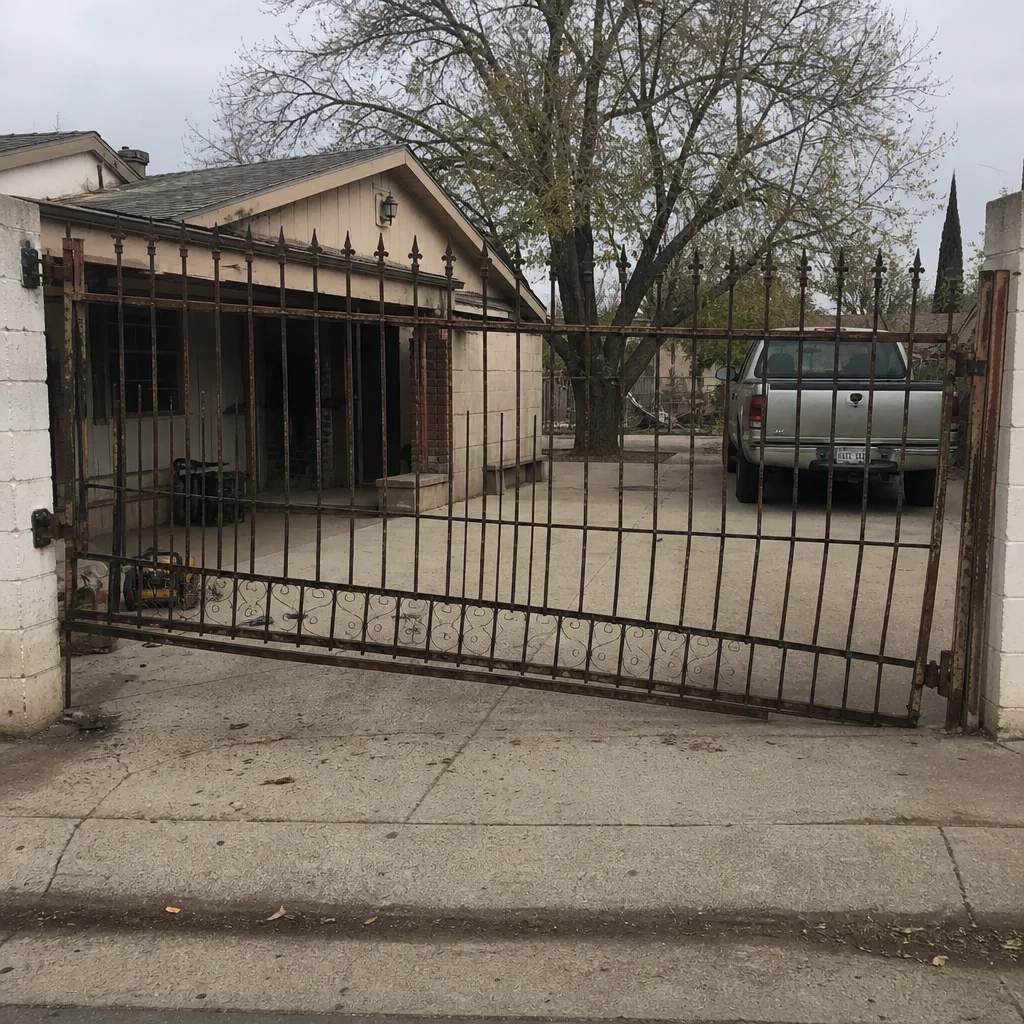 Before
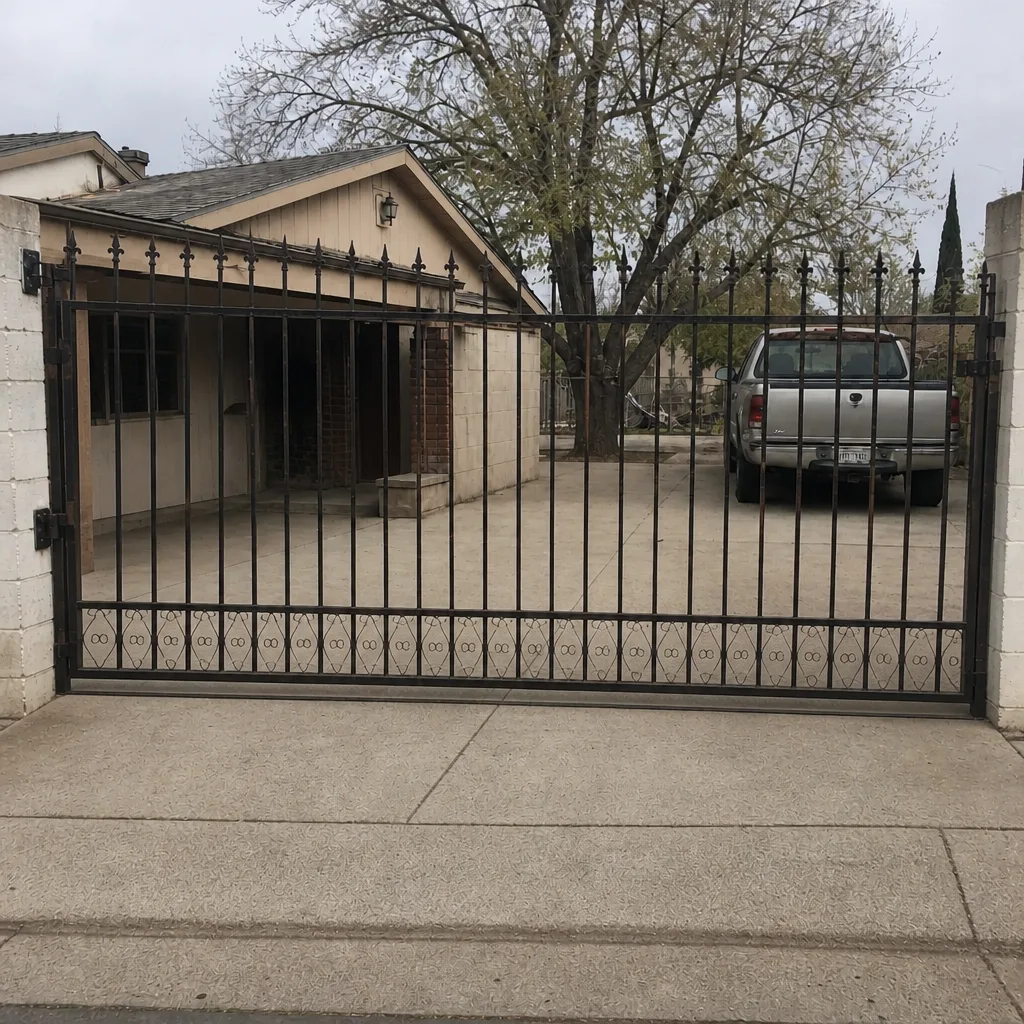 After
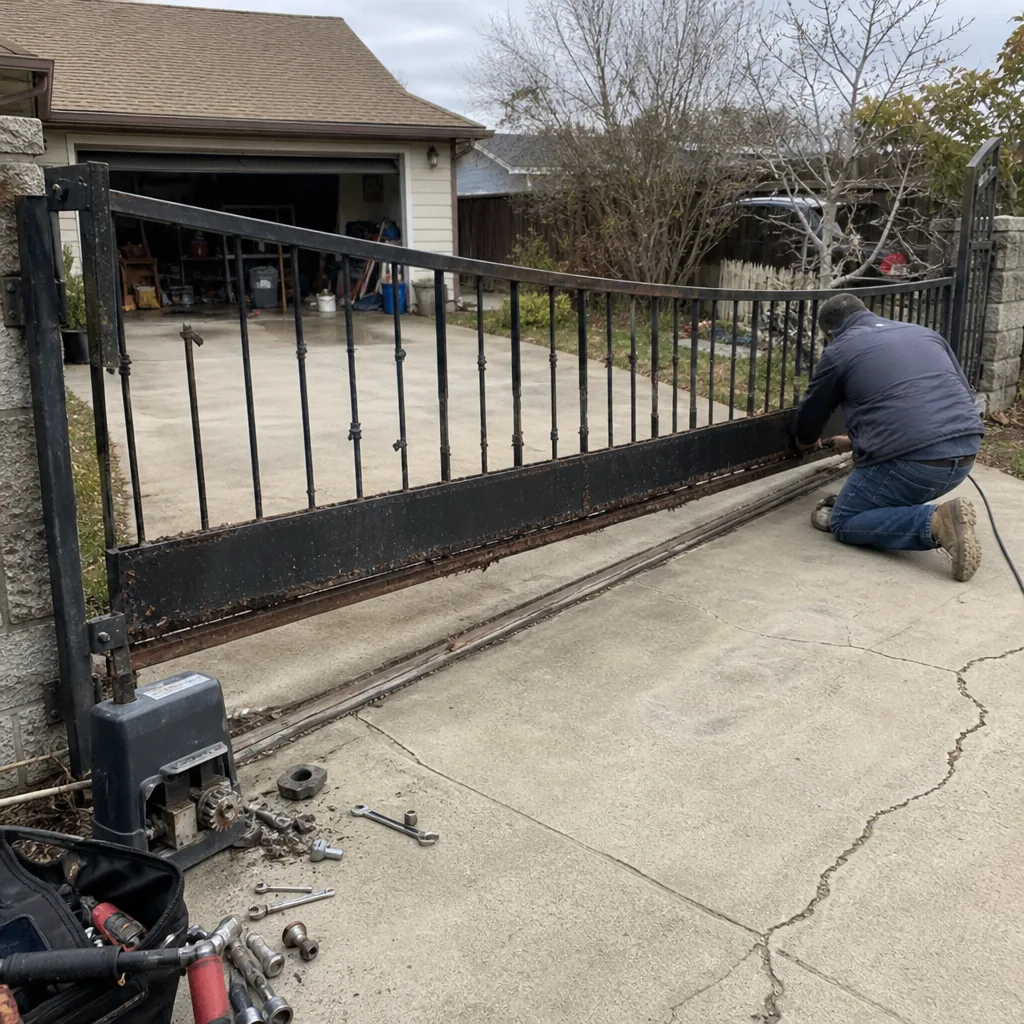 Before
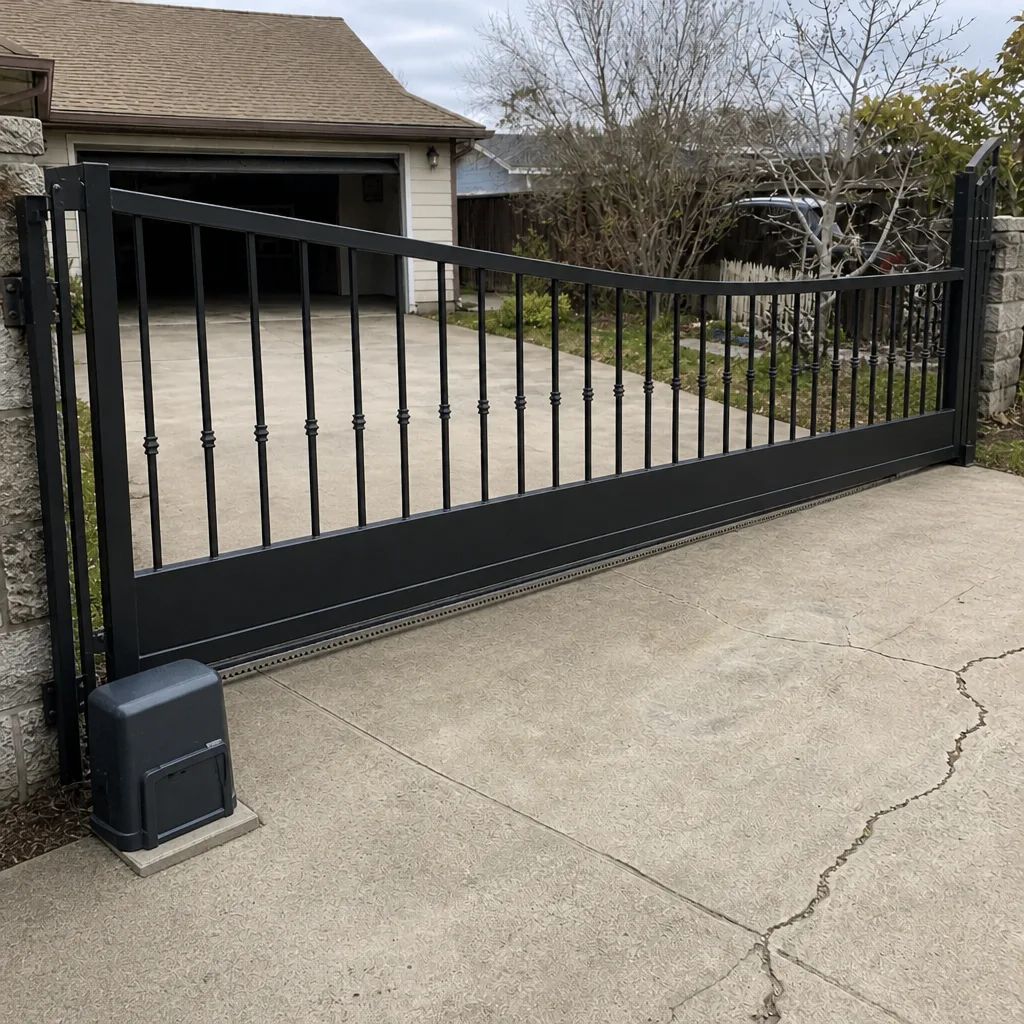 After
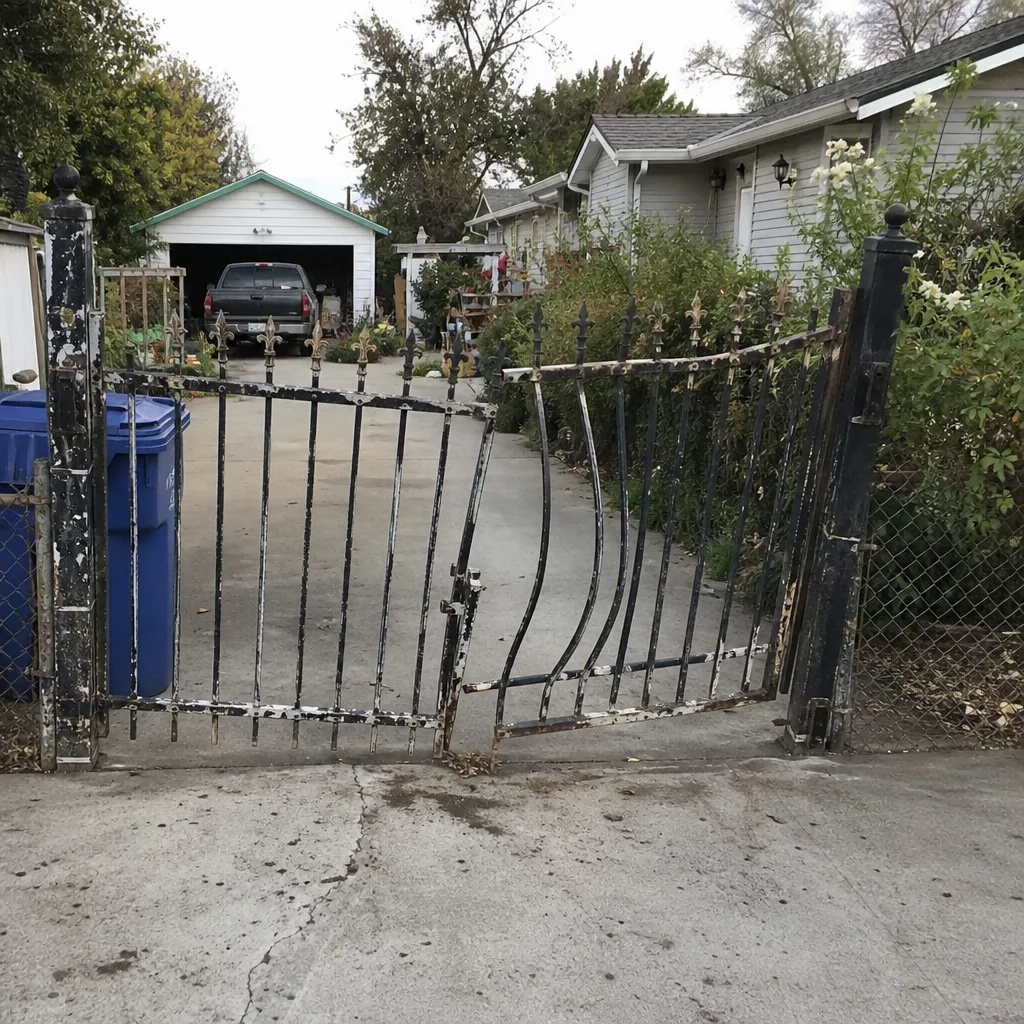 Before
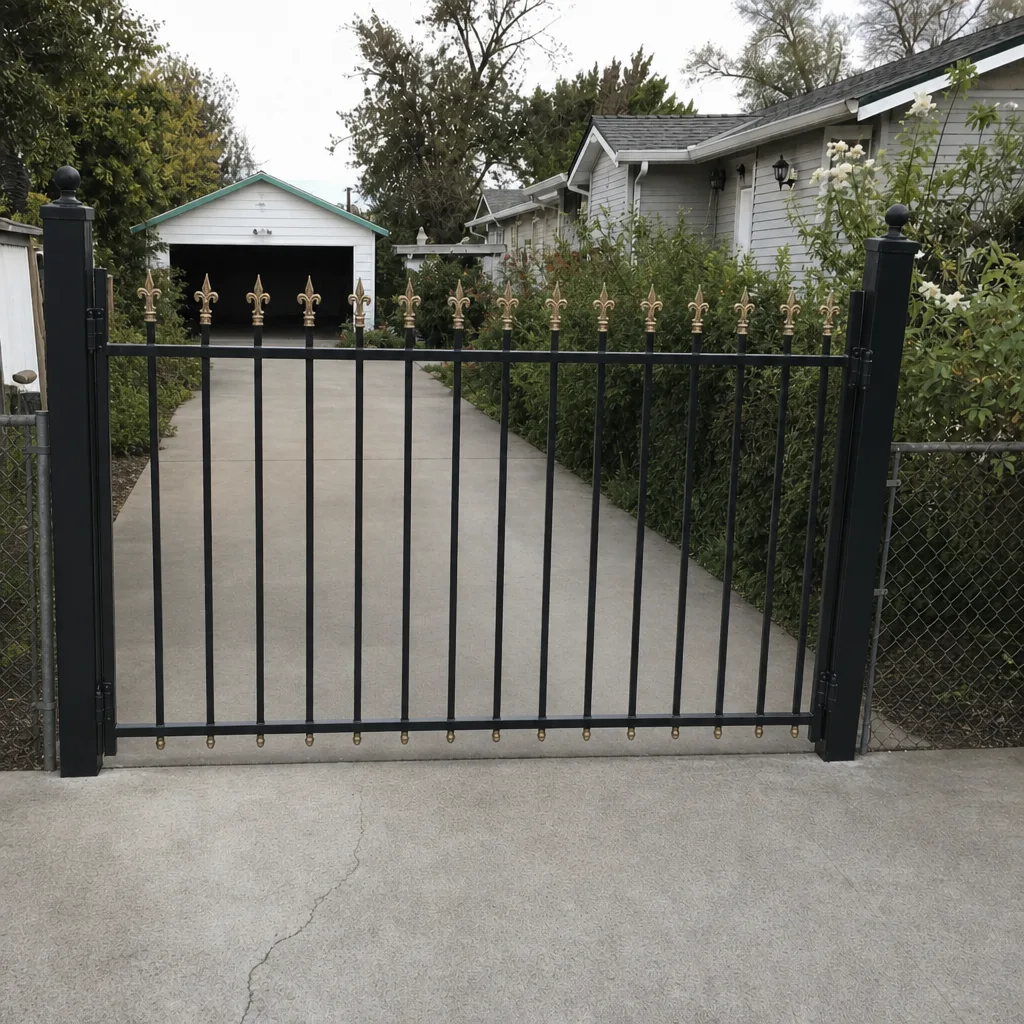 After
When to Call a Professional
Call a professional when the question stops being “what’s broken” and starts being “is this job done right.” That includes any project that changes the gate’s size, location, or function; any new electrical run to an operator; any time you’re converting a manual gate to automatic; and any inherited gate with no documentation. It also includes the safety side. If a device isn’t functioning, or you can’t confirm it’s functioning, an inspector will confirm it for you, and the results will be the same either way. A gate specialist, not a generalist, is the right call for manual or motorized systems, because the same company should be able to diagnose the operator, check the devices, and tell you honestly what scope you’re in. Gate Repair Stockton offers free estimates in Stockton. Call (833) 946-1127. We answer 24/7. Fast dispatch from 7am to 7pm, Sunday through Friday.
Frequently Asked Questions
Most gate repairs in Stockton don’t require a building permit. Replacing hardware, control boards, photo eyes, keypads, or even a motor where the wiring, footing, and gate stay the same is generally classified as like-for-like repair. The exceptions are changes in gate size, location, function, new electrical runs, and new gate installations. When in doubt, call the City of Stockton Building Division and describe the exact scope. Call (833) 946-1127 for an on-site estimate and we’ll help you scope it.
UL 325 is the safety standard for entrapment protection on automatic gate operators, and a gate in California needs to comply regardless of whether a permit was required for its installation. Compliance means the entrapment zones are covered by functioning safety devices, typically photo eyes on a slide gate and a reversing edge on a swing gate, and that the devices actually stop and reverse the gate when obstructed. It’s a functional standard. Gate Repair Stockton tests safety devices on every operator we service. Call (833) 946-1127 to schedule a check.
Yes. Legalizing an existing installation is a known process with the City of Stockton Building Division. The sequence is to document what exists, ask the Building Division how they classify it, find and fix the compliance gaps before you apply, coordinate the electrician if electrical work is involved, and submit for inspection. Starting the process while the gate is still working is far easier than starting it after an incident. Call (833) 946-1127 if you need a professional assessment before filing.
You can’t tell compliance from the way the gate looks or from the fact that it opens reliably. A compliant gate has functioning entrapment protection devices, correct placement, and verified obstruction response. The only way to know is to test the devices, not observe them. Gate Repair Stockton diagnoses operator and safety-device compliance for manual and motorized systems on the brands we work with, including BFT, Linear, and Viking. Call (833) 946-1127 for a free estimate on the review.
Very likely, if your property is in a Stockton-area community with an association. HOA architectural rules set requirements for gate style, material, color, height, and in some cases equipment screening on top of what the city allows. A city-permitted gate can still be rejected by an architectural committee. Get the HOA’s written approval before ordering any equipment or filing for a permit. Call (833) 946-1127 and we’ll help you scope the install to match the approved design.
It can, especially after a property-damage or injury claim. Insurers evaluate whether unpermitted improvements were made and whether the installation met code. Without a permit and install documentation, you may be relying on contractor invoices that no longer exist, and the claim conversation shifts from what happened to whether the installation was legal. Keep the permit records and safety-device testing documentation with your property files. Call (833) 946-1127 to review an inherited installation before a claim or a sale forces the question.
The Bottom Line
Most gate repairs in Stockton need no permit, and the jobs that do are the ones most often skipped. The permit line is about structural and electrical scope: gate replacement, functional change, new electrical service, new footing, manual-to-automatic conversion. Everything else is repair, and repair doesn’t go to the city. What matters more is compliance: UL 325 entrapment protection on any automatic operator, functioning and tested, plus the California Title 24 requirements that apply to operator installation. Once you add HOA rules, insurance documentation, and the retroactive path for a previous owner’s install, the picture is complete. When you’re ready to review your gate, or to scope a project properly, call a gate specialist rather than a generalist. Call (833) 946-1127. We answer 24/7. Fast dispatch from 7am to 7pm, Sunday through Friday.
Written by the team at Gate Repair Stockton, serving Stockton since 2017.